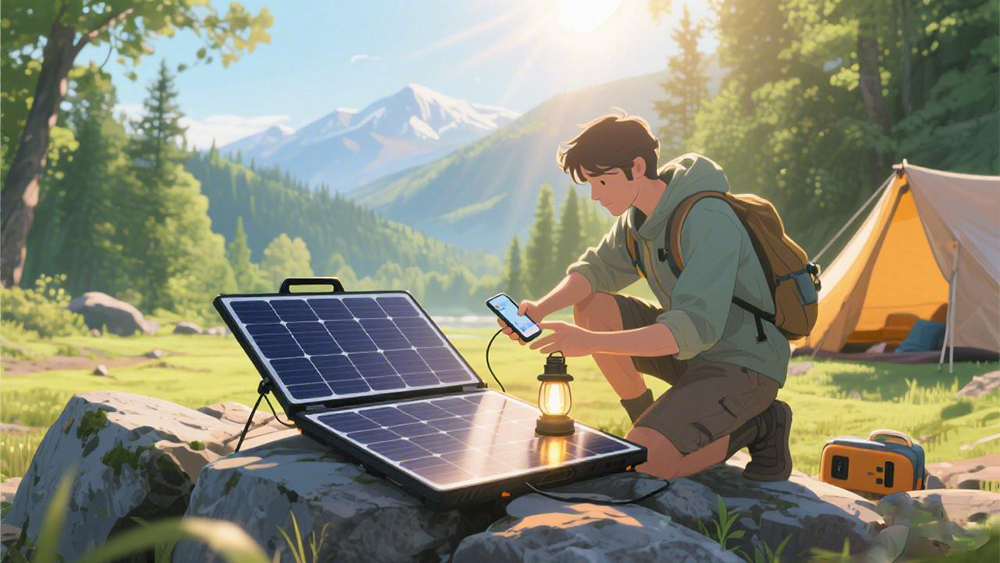
Portable solar panels are compact, lightweight devices designed to capture sunlight and convert it into electricity. They typically consist of foldable or rollable photovoltaic panels, integrated charge controllers, and output ports (such as USB, DC, or even AC outlets).
Key features include:
Portability: Often designed with handles, carrying cases, or backpack-friendly formats for easy transport during camping, hiking, road trips, or emergencies.
Versatile Charging: Can power or recharge devices like smartphones, laptops, cameras, portable battery power stations, and small appliances.
Off-Grid Use: Ideal for outdoor enthusiasts, remote work setups, disaster preparedness, or supplementing power in areas without grid access.
Eco-Friendly: Provide clean, renewable energy with no emissions or noise, unlike fuel-powered generators.
Why People Choose Portable Solar?
People choose portable solar panels for a combination of practical, economic, and lifestyle reasons, primarily centered on energy independence, convenience, and environmental values.
Here’s a breakdown of the key motivations:
Energy Access Anywhere
Off-Grid Adventures: Essential for camping, hiking, RV trips, or boating where grid power is unavailable.
Emergency Preparedness: Provides backup power during blackouts, natural disasters, or grid failures.
Remote Work/Travel: Enables digital nomads or remote workers to stay connected in nature or off-grid locations.
Cost Savings & Efficiency
Fuel-Free Operation: No need to buy gasoline or propane for generators—sunlight is free.
Low Maintenance: Few moving parts mean minimal upkeep compared to fuel generators.
Avoids External Power Fees:Saves on campsite electrical hookup fees or café charging stops.
Environmental Benefits
Clean & Quiet: Zero emissions, carbon-free, and silent—unlike noisy, polluting gas generators.
Reduces Reliance on Fossil Fuels: Supports sustainable energy use and lowers personal carbon footprint.
Convenience & Versatility
Lightweight & Compact: Easy to pack, carry, and set up (many are foldable or rollable).
Multi-Device Charging: Powers phones, laptops, lights, drones, portable fridges, and more via USB/DC/AC ports.
Plug-and-Play Simplicity: Often includes integrated charge controllers and adapters for immediate use.
Growing Affordability & Tech Improvements
Lower Prices: Increased manufacturing has reduced costs, making portable solar more accessible.
Higher Efficiency: Modern panels (monocrystalline, PERC cells) generate more power in less space, even in partial sun.
Peace of Mind
Self-Sufficiency: Reduces anxiety about dead batteries or losing communication in remote areas.
Reliable for Daily Use: Some use portable solar to top up home power banks or as a supplemental home energy source.
Popular Use Cases
Outdoor Enthusiasts: Powering gear at campsites or on long trails.
Festival-Goers: Keeping devices charged during multi-day events.
Photographers/Videographers: Running cameras and drones in the field.
Disaster-Prone Areas: Emergency kits for hurricanes, wildfires, or storms.
Stay updated on solar news
Subscribe to our newsletter and be the first to receive news about our latest developments in solar power.
Are Portable Solar Panels Worth It?
YES, They Are Worth It If You:
Frequently Enjoy Off-Grid Activities:
For camping, RVing, boating, or backpacking, they’re invaluable for keeping devices charged without relying on facilities or generators.
Need Emergency Preparedness:
A reliable backup during power outages or disasters, providing essential power for communication, lights, or medical devices.
Value Energy Independence & Eco-Friendliness:
You prefer clean, silent, renewable energy over gas generators and want to reduce your carbon footprint.
Work or Travel Remotely:
Digital nomads, photographers, or researchers in the field can maintain productivity anywhere with sunlight.
Want to Avoid Recurring Costs:
After the initial purchase, sunlight is free—saving on campsite hookup fees, fuel for generators, or café charging.
Portable vs Traditional Solar: Key Differences
Here are the key differences between portable and traditional (fixed) solar panels presented in a table:
Comparison Dimension
Portable Solar Panels
Traditional (Fixed) Solar Systems
Primary Purpose
Mobile, temporary power for outdoor, emergency, or short-term off-grid use.
Long-term fixed installation for grid-tied or off-grid power generation in homes, businesses, or industries.
Installation & Portability
Ready to use; lightweight, foldable/rollable, easy to carry. No installation needed.
Requires professional installation; permanently mounted on roofs or ground structures; not movable.
Power & Output
Lower wattage (typically 10W–500W), limited generation; suitable for charging small devices.
High wattage (kilowatts to megawatts); can cover most or all electricity needs of a building.
System Complexity
Highly integrated; usually includes panel, charge controller, and output ports; plug-and-play.
Complex system with multiple panels, inverters, wiring, mounting structures, and sometimes battery storage.
Storage Dependency
Usually paired with a portable power station; rarely includes large built-in batteries.
Can be paired with large stationary battery systems or directly grid-tied.
Cost
Lower upfront cost (hundreds to a few thousand dollars), but higher cost per watt.
High upfront investment (tens of thousands+), but higher long-term ROI and lower levelized cost of energy.
Residential, commercial, industrial, and farm applications for long-term energy savings or energy independence.
Efficiency & Lifespan
Good efficiency, but materials favor portability; generally less durable over the long term.
High efficiency with durable materials; long lifespan (typically 25+ years) and stable performance.
Grid Connectivity
Cannot be grid-tied; purely for off-grid use.
Can be grid-tied (with net metering) or configured for off-grid operation.
XM Newlight Energy Portable Solar Solutions
1) Portable Solar Panels:(Customized is available)
Foldable Solar Suitcases/Briefcases: Compact, all-in-one units with kickstands, often ranging from 50W to 400W, ideal for RVs, camping, and backup power.
Solar Blankets/Folding Panels: Ultra-portable, lightweight panels for backpacking or charging small devices.
High-Efficiency Cells: Likely using monocrystalline solar cells for better performance in various light conditions.
2) Portable Power Stations (Solar Generators):
Lithium-based Batteries: Offering models with capacities from 300Wh to over 2000Wh to power everything from phones to refrigerators.
Multiple Outputs: Equipped with AC outlets, DC ports, USB-C PD, and standard USB ports.
Pure Sine Wave Inverters: For safe powering of sensitive electronics like laptops and medical devices.
3) Solar Generator Kits: (Depends on customer needs)
Bundled Solutions:Power stations pre-packaged with compatible solar panels for a complete “plug-and-play” solar charging system.
Visit Folding solar panel of XM Newlight Energy at: