

Menu
News

News

Folding vs Flexible vs Rigid Solar Panels: Which Solution Is Right for Your Application?

News | Mar 09,2026

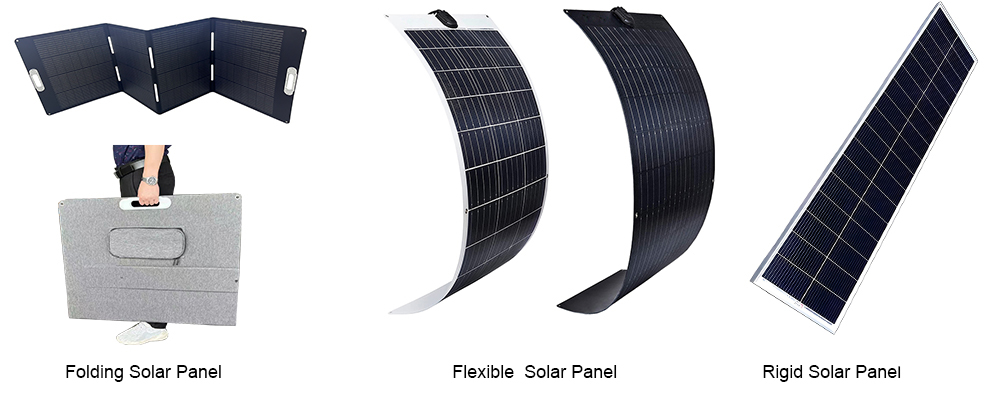
Side-by-Side Comparison Chart
Folding vs Flexible vs Rigid Solar Panels: Which Solution Is Right for Your Application?-NEWLIGHT ENERGY

Feature Folding Solar Panels Flexible Solar Panels Rigid Solar Panels
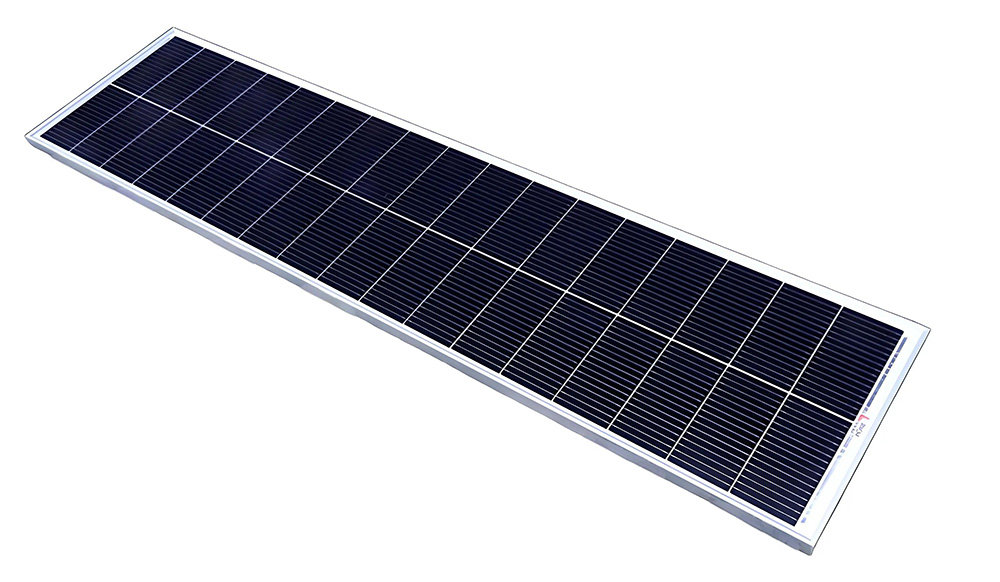
Construction Multiple rigid or semi-flexible panels hinged together. Often have a canvas or synthetic fabric backing. Thin-film photovoltaic cells (e.g., amorphous silicon, CIGS or semi-flexible solar panel use PERC, PERC mono solar cell, etc.) on a flexible polymer or even some with a metal substrate. Silicon cells (mono/polycrystalline) are laminated between tempered glass and a rigid aluminium frame.
Flexibility Limited; can be folded and unfolded, but individual panels are rigid and cannot be bent. High; can be bent to a relatively tight radius to fit curved surfaces. None; completely rigid.
Weight Moderate. Heavier than flexible panels but designed to be carried. Very light. A major advantage for weight-sensitive applications. Heavy. Requires a sturdy mounting system.
Efficiency Moderate to High typically 23-25%, depending on the cells used. PERC mono solar panel23-25%, depending on the cells used; CIGS about 18% but cloudy days generate more energy good for solar cylindrical design. Moderate to High typically 23-25%, depending on the cells used).
Durability Hinges can wear out over time. Vulnerable to impact damage when folded. More susceptible to scratches, punctures Designed to withstand harsh weather (hail, wind, snow) for decades.
Cost

(per Watt)

Higher. Combines portability features with panel cost. Moderate. Higher than rigid solar panel Lowest. Traditional technology.
Typical Use Cases Camping, hiking, RV trips, boating, emergency backup power. Curved surfaces like boat decks, campervans, caravans, tents, and light weight roof buildings. Residential/commercial rooftops, ground-mounted arrays, large-scale solar farms.
Power Output Typically low to moderate (e.g., 50W to 400W per unit). Typically low to moderate (e.g., 50W to 500W per panel). Wide range, from small residential (250W-400W) to large commercial/utility scale (500W+).
Installation No installation needed. Simply unfold and position towards the sun, often with a kickstand. Can be glued or bolted directly onto a surface. Minimal mounting hardware required. Requires mounting brackets and significant installation effort for permanent placement.
Portability High. Designed for easy carrying, packing, and quick setup. Moderate. Lightweight and can be rolled up, but less convenient to set up than folding panels. None. Permanently installed.

Folding Solar Panels & Flexible Solar Panels & rigid solar panel Pros & Cons

Folding Solar Panels
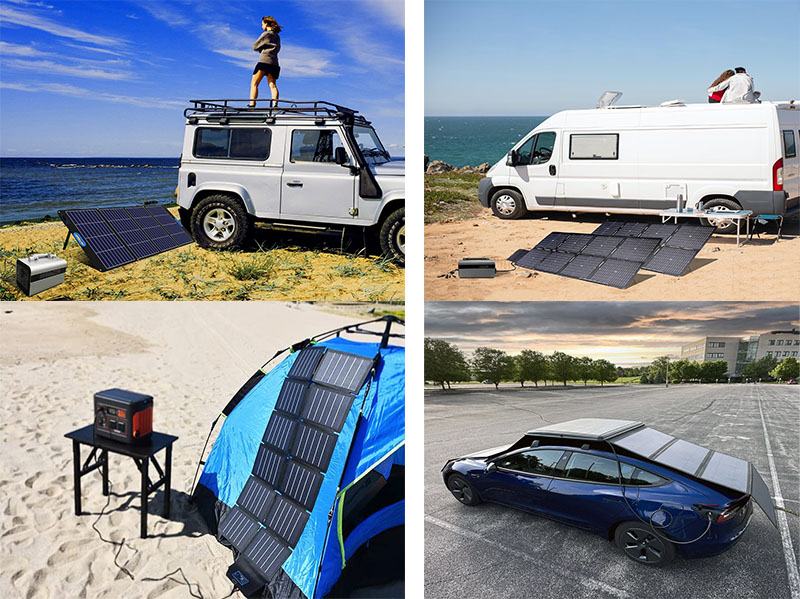
Folding vs Flexible vs Rigid Solar Panels: Which Solution Is Right for Your Application?-NEWLIGHT ENERGY

These are portable panels made from flexible solar cells, designed with hinges to fold up for storage and transport. They are ideal for camping, hiking, and emergency backup power.

Pros:

  • Portability: Their key advantage. They are easy to carry, store, and set up anywhere.
  • Easy Deployment: Usually comes with built-in stands, kickstands, or loops for hanging, allowing for quick setup.
  • Integrated Features: Many models include a charge controller, cables, and multiple outputs (DC, USB-A, USB-C) in one package.
  • Versatility: Perfect for charging batteries, laptops, phones, and small appliances while off-grid.
  • Lightweight Design: Much lighter than a comparable-output rigid panel system.

Cons:

  • Highest Cost per Watt:  The most expensive option per watt of power generated.
  • Durability Concerns: ​The folding hinges and joints can be points of failure over time. They are less rugged than rigid panels.
  • Limited Power Output: Designed for smaller-scale applications; not suitable for powering a whole home.
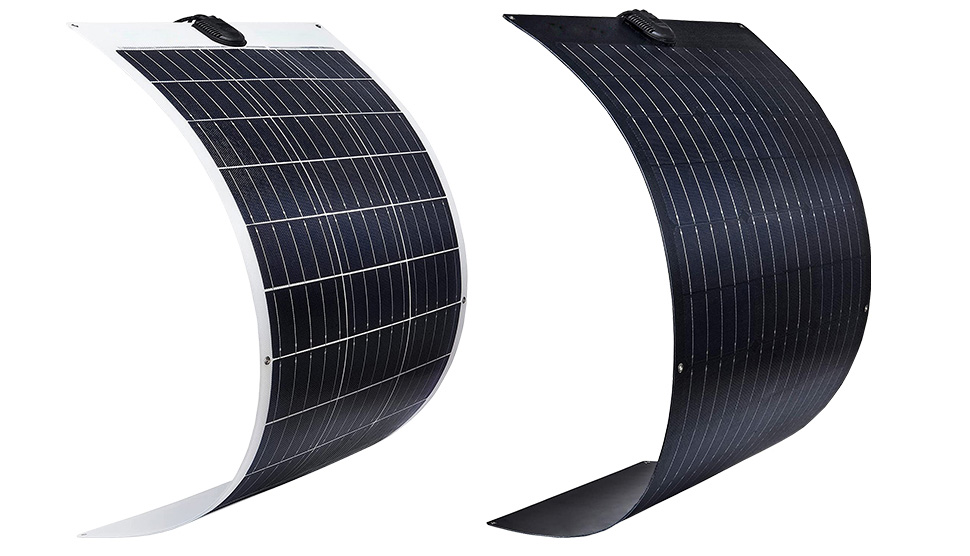
Flexible Solar Panels (Thin-Film)

Folding vs Flexible vs Rigid Solar Panels: Which Solution Is Right for Your Application?-NEWLIGHT ENERGY

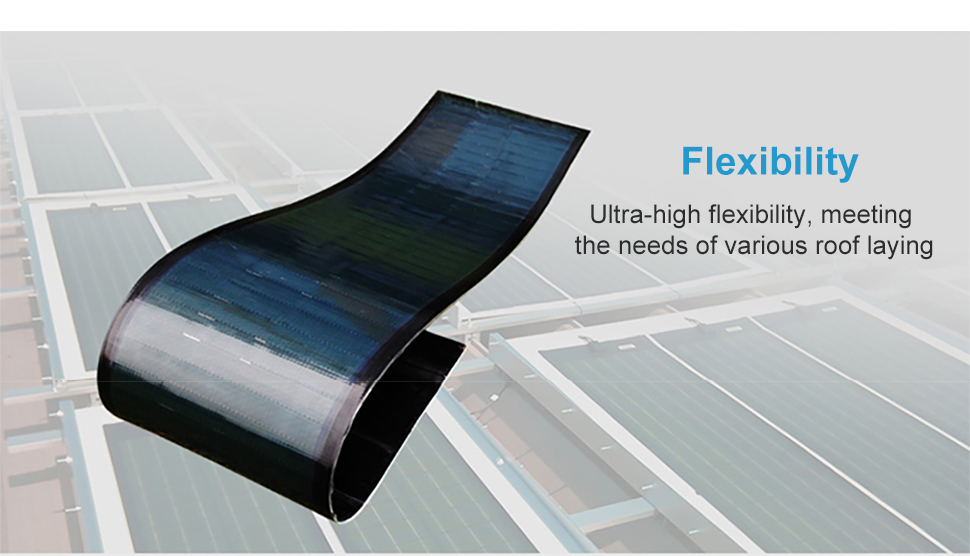
These panels are made with thin layers of photovoltaic material (like CIGS or amorphous silicon) deposited on a flexible substrate, CIGS flexible solar panel really 360 degree could be rolling design;

Semi-flexible solar panels made by PERC etc mono solar cell also,They can bend slightly (typically up to a 30-degree curve).

Pros:

  • Lightweight: Very thin and light, making them easy to handle and integrate into unconventional places.
  • Conformability: Can be mounted on curved or irregular surfaces like RV roofs, boat decks, caravan roofs, light weight building roofs or even backpacks.
  • Aesthetics: Can be seamlessly integrated into surfaces without the bulky look of rigid panels.
  • Partial Shade Tolerance: Tend to perform better than rigid panels when partially shaded, as the entire panel isn’t disabled by one shadow.
  • Low Profile: No sharp edges or heavy frames.

Cons:

  • Higher Cost per Watt: More expensive than rigid panels when comparing total output.
  • Susceptibility to Damage: The flexible surface can be punctured or scratched more easily than tempered glass.

Rigid Solar Panels (Standard PV Panels)

Folding vs Flexible vs Rigid Solar Panels: Which Solution Is Right for Your Application?-NEWLIGHT ENERGY

These are the traditional, framed solar panels made with silicon cells (monocrystalline or polycrystalline). They are the most common type seen on rooftops.

Pros:

  • Durability:​ Extremely robust, with tempered glass and strong aluminum frames. They are built to withstand harsh weather (hail, snow, wind) for 25+ years.
  • Long Lifespan: Comes with extensive warranties (often 25 years) and can last 30 years or more.
  • Cost-Effective: Have the lowest cost per watt of electricity generated over their lifetime.

Cons:

  • Heavy and Bulky: Difficult to move and require a sturdy, permanent mounting structure.
  • Not Portable: Impossible to take with you if you move or want to use them off-grid temporarily.
  • Brittle: The glass surface can crack or shatter if impacted.
  • Installation Constraints: Must be mounted on a flat or angled rigid surface.

Which Solution Is Right for Your Application?

A Step-by-Step Guide

Step 1: Define Your Primary Use Case (The Most Important Question) 

First, determine where and how you intend to use the solar panel. This is the biggest deciding factor.

For large off-grid solar power station?

Your Choice:  Rigid solar Panels.Why: The cheapest cost for solar panel.

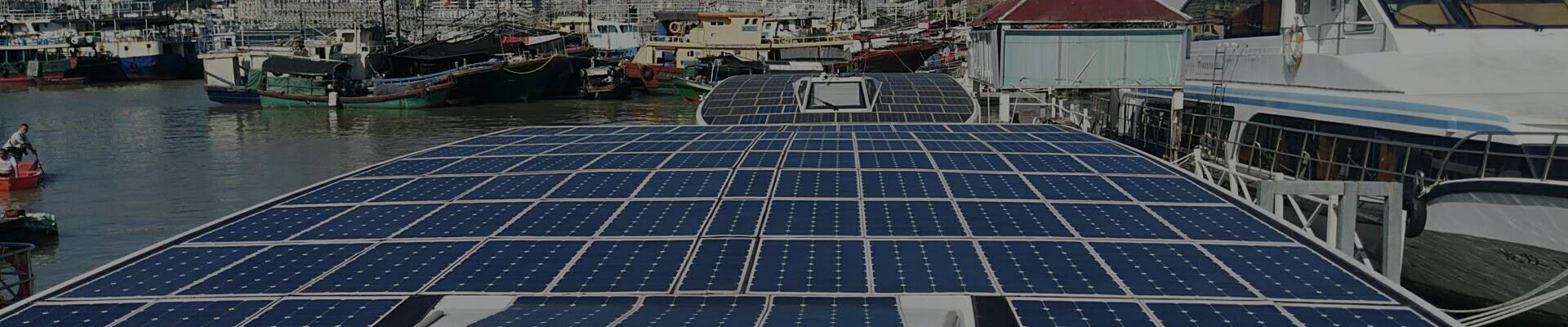
To install on a vehicle, boat, or an irregularly shaped surface (like an RV roof, camper van, or curved awning) and need retrofit lightweight building roofs?

Your Choice: Flexible solar Panels.Why: Their lightweight and conformable nature allows them to be glued or strapped to curved surfaces where rigid panels cannot go.

For portable, on-the-go power (camping, hiking, emergency kit, remote job site)?

Your Choice: Folding Panels.Why: Their portability, ease of setup, and integrated features make them ideal for charging devices and small batteries anywhere.

Step 2: Assess Your Power Needs

Calculate how much electricity you need to generate. This will determine the wattage of the panel(s) you require.

List your devices:​ Make a list of everything you want to power (e.g., laptop, phone, lights, fan).

Find their power ratings:​ Check the label or manual for the wattage (W) of each device. If you only see amps (A) and volts (V), multiply them (Watts = Volts x Amps).

Estimate usage time:​ Estimate how many hours per day you will use each device.

Calculate Watt-hours (Wh):​ Multiply the wattage of each device by its daily usage time.

Example: A 60W laptop used for 4 hours = 240 Wh. A 10W LED light used for 5 hours = 50 Wh. Total daily need = 290 Wh.

Once you know your daily Wh requirement, you can choose a panel (or combination of panels) that can produce that amount of energy. Remember that solar panels produce less power on cloudy days and none at night.

Step 3: Consider Physical Constraints

Available Space: Do you have a large, open area or a very limited space?

Limited Space: Prioritize rigid panels for their high efficiency.

Abundant Space: You could consider flexible panels, accepting their larger footprint for the benefit of conformability or lower weight.

Weight Sensitivity: Are you installing on a weight-sensitive platform?

Yes: Choose flexible or folding panels.

No: Rigid panels are fine.

Surface Type: Is the mounting surface flat, curved, or non-existent (like open ground)?

Flat/Rigid Surface: Any type works, but rigid is standard.

Curved Surface: Flexible panels are designed for this.

Non-Existent Surface: You need a portable solution (folding panels) or a ground-mount for rigid panels.

Step 4: Evaluate Portability Requirements

Permanent Installation: Rigid panels are bolted down.

Semi-Permanent Installation: Flexible panels are often glued or strapped on.

Temporary/Mobile Use:Folding panels are carried and set up as needed.

Step 5: Set Your Budget

Understand the trade-offs between upfront cost and long-term value.

Lowest Cost Per Watt: Rigid panels. Best for big solar power station on a budget.

Medium Cost Per Watt: Flexible panels. You pay a premium for weight savings and conformability.

Highest Cost Per Watt: Folding panels. You pay the most for portability and convenience.

NEWLIGHT ENERGY, what we can dosolar panels?

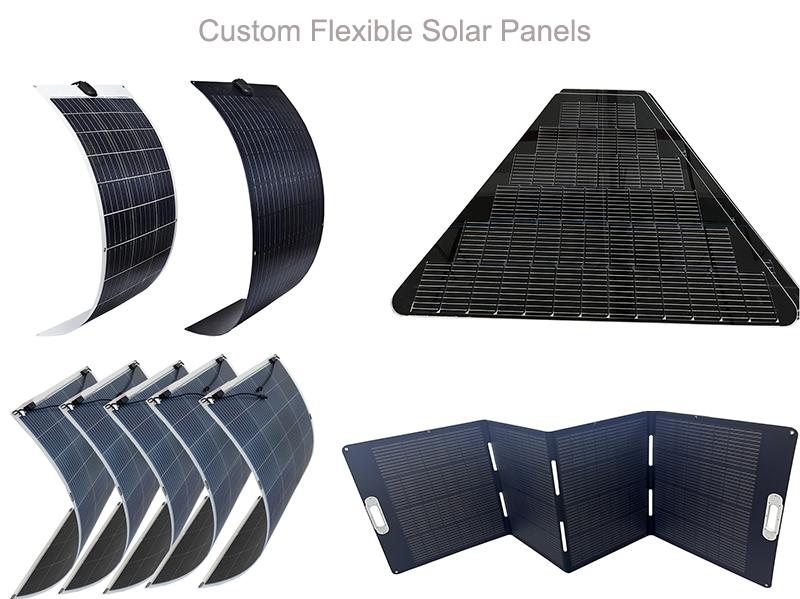
The main advantages of the NEWLIGHT ENERGY factory make Customized flexible solar panels and folding solar panels to meet different clients’ needs.

Solar Panels in Any Size, Any Shape we can make, check at: https://www.xmnewlight.com/custom. Our team provide solutions for your needs.

Folding vs Flexible vs Rigid Solar Panels: Which Solution Is Right for Your Application?-NEWLIGHT ENERGY

--- END ---

author

Jason Xiao

Author Jason Xiao focus on Flexible Solar Panel And Solar Light more than 15 years, Expert of solar business.