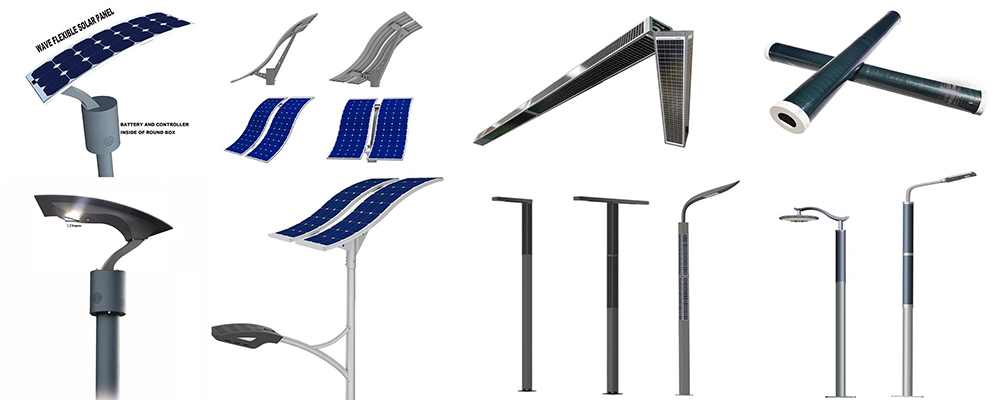


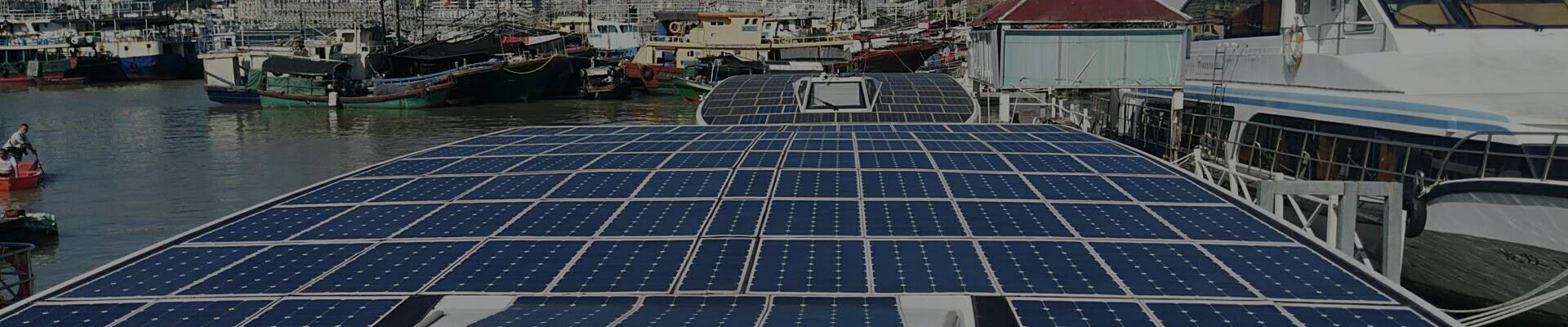
What Are Vertical Solar Street Lights?
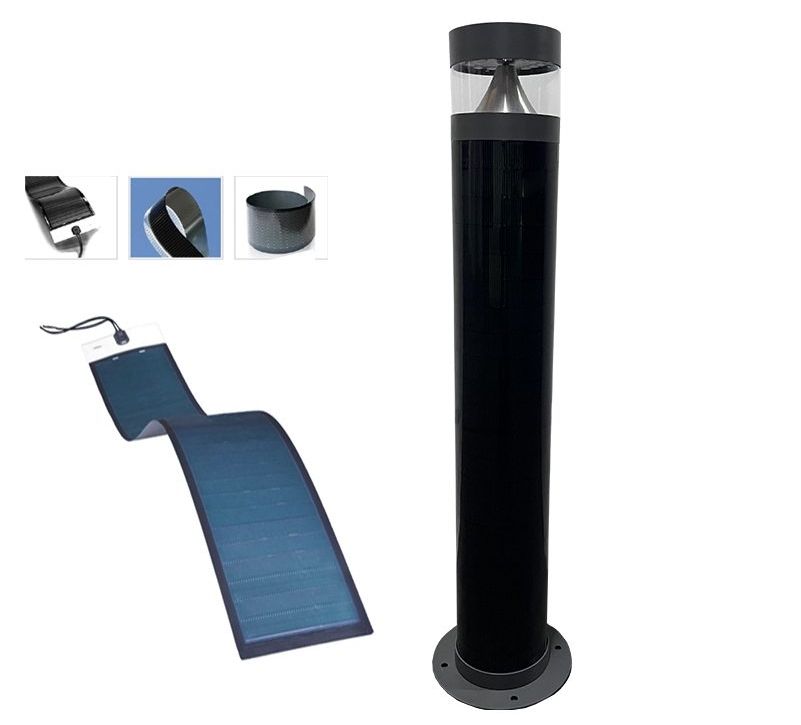
A vertical solar street light is a lighting system that integrates photovoltaic panels into the pole structure in a cylindrical or wrap-around configuration, rather than mounting a flat panel on top of the pole. This seemingly simple design change has profound implications for energy capture, structural integrity, aesthetic integration, and long-term maintenance.
In a traditional solar street light, a flat solar panel is mounted at the top of the pole, typically tilted at an angle optimized for the installation latitude. The panel must face the equator (south in the northern hemisphere, north in the southern hemisphere) for optimal performance. This configuration works well in open, unobstructed locations but has significant limitations in urban environments, coastal areas, and high-wind zones.
Vertical solar street lights solve these limitations by wrapping flexible or rigid solar panels around the pole surface. The panels form a continuous or segmented cylindrical surface that captures sunlight from every direction throughout the day. This 360° energy capture capability is the defining innovation of the vertical solar light design — and it is transforming how cities, developers, and specifiers think about solar-powered public lighting.
The Evolution of Solar Street Light Design
The first generation of solar street lights (2005–2015) used a standard flat glass panel bolted to a bracket above the light fixture. These systems were functional but visually awkward, structurally vulnerable to wind damage, and often underperformed because the fixed panel orientation could not maximize sunlight capture through changing seasons.
The second generation saw improvements in panel efficiency and battery technology, but the fundamental top-mounted flat panel design remained unchanged.
The third generation — vertical solar street lights — represents a paradigm shift. By integrating the solar panels into the pole itself, designers have unlocked a set of performance and aesthetic benefits that make solar lighting viable for urban streetscapes, heritage zones, and architecturally sensitive environments where traditional solar lights were previously rejected on visual grounds.
How Cylindrical Solar Panels Enable 360° Energy Capture
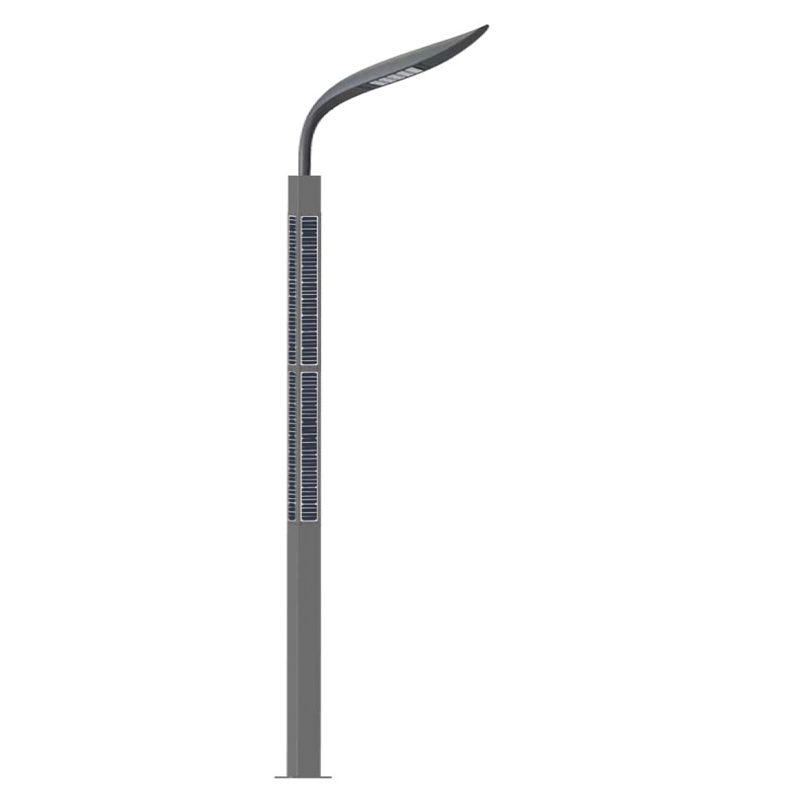
The fundamental advantage of cylindrical solar panels is their ability to capture sunlight from all directions simultaneously. This is not a minor convenience — it is a fundamentally different approach to photovoltaic energy harvesting that delivers measurable performance advantages in real-world conditions.
All-Day Energy Collection
A flat solar panel optimally oriented for its latitude receives strong direct sunlight for approximately 4–6 hours per day — the “peak sun hours” that define its effective charging window. Before and after this window, the angle of incidence between the sun and the panel surface is so oblique that energy generation drops to 10–30% of rated capacity.
A cylindrical solar panel, by contrast, always has some surface area oriented favorably toward the sun, regardless of the sun’s position in the sky. In the morning, the east-facing portion of the cylinder generates power. At midday, the top and south-facing surfaces are most productive. In the afternoon, the west-facing section takes over. The result is a broader, flatter power generation curve that extends effective charging from 4–6 hours to 8–12 hours per day.
Capture of Diffuse and Reflected Light
Cylindrical panels are inherently better at capturing diffuse (scattered) and reflected (albedo) light than flat panels. A flat panel rejects any light arriving at an angle beyond approximately 50° from perpendicular — such light simply bounces off the glass. A cylindrical surface, being curved, always presents some portion of its surface at a near-optimal angle to incoming light, whether that light comes directly from the sun, is scattered by clouds, or is reflected from buildings, roads, or snow cover.
Field studies consistently show that vertical/cylindrical solar panels generate 15–30% more total daily energy than equivalently-rated flat panels in real urban environments, with the advantage increasing in cloudy conditions, high-latitude locations, and settings with reflective ground surfaces such as snow or light-colored pavement.
Seasonal Performance Stability
A flat panel optimized for summer sun angle (approximately 15–25° tilt from horizontal) performs poorly in winter when the sun is low in the sky. A vertical panel has no such seasonal bias — its 360° capture surface ensures consistent energy generation year-round. For solar street lights, which must operate reliably through the longest winter nights, this seasonal stability is critical.
Vertical vs Flat Solar Panels: Key Differences
Understanding the engineering differences between vertical cylindrical and flat panel systems is essential for making informed specification decisions.
Energy Generation Profile
- Flat panel: High output during 4–6 peak sun hours; minimal output outside this window. Total daily energy is highly dependent on precise orientation and tilt angle.
- Vertical cylindrical: Moderate but sustained output over 8–12 hours. Total daily energy is less dependent on orientation because the cylinder captures light from all directions throughout the day.
Space Utilization
- Flat panel: Requires a separate mounting structure extending above or beside the pole, occupying additional space. The panel footprint is larger than the pole diameter.
- Vertical cylindrical: Uses the pole surface area itself for energy capture. No additional footprint required — the lighting system occupies only the pole cross-section.
Structural Load
- Flat panel: Acts as a sail in high winds. The cantilevered mounting bracket experiences significant bending moments that require heavier poles and foundations. A 100W flat panel can exert wind loads equivalent to 150–300 kg of lateral force in a Category 2 hurricane (160 km/h winds).
- Vertical cylindrical: The wrap-pole structure allows wind to flow smoothly around the pole, reducing wind load by 60–80% compared to an equivalently-sized flat panel. No cantilevered bracket means simpler, lighter, and less expensive pole and foundation requirements.
Aesthetic Integration
- Flat panel: The panel is visually dominant, creating a distinctive “solar street light” appearance that many urban designers and architects find objectionable for heritage streetscapes and design-sensitive environments.
- Vertical cylindrical: The solar panel is integrated into the pole, creating a clean, uninterrupted visual line. The result resembles a conventional street light pole — the solar technology is discreet rather than dominant.
Installation Complexity
- Flat panel: Two-stage installation — first mount the pole, then mount and connect the panel. Requires lifting equipment for panels over 20 kg. Panel orientation must be precisely set during installation.
- Vertical cylindrical: Single-stage installation — the panel is pre-integrated into the pole. No separate panel mounting step. No orientation decisions needed — the cylinder captures light from all directions regardless of installation orientation.
Maintenance
- Flat panel: Dust, bird droppings, and snow accumulate on the horizontal or near-horizontal surface. The panel may need cleaning every 1–3 months in dusty or agricultural environments. Snow accumulation blocks charging entirely.
- Vertical cylindrical: The near-vertical surface sheds dust, snow, and debris naturally. Rainwater flows down the surface, providing self-cleaning. Cleaning frequency is typically 2–4 times lower than for flat panels in equivalent environments.
| Parameter | Flat Panel | Vertical Cylindrical |
|---|---|---|
| Peak generation window | 4–6 hours | 8–12 hours |
| Wind load (relative) | 100% (baseline) | 20–40% of flat panel |
| Annual energy yield | Baseline | 15–30% higher |
| Space requirement | Panel + bracket | Pole surface only |
| Self-cleaning | Poor | Excellent |
| Visual integration | Dominant | Discreet |
| Installation steps | 2-stage | 1-stage |
Performance in Diffuse Light and Urban Environments
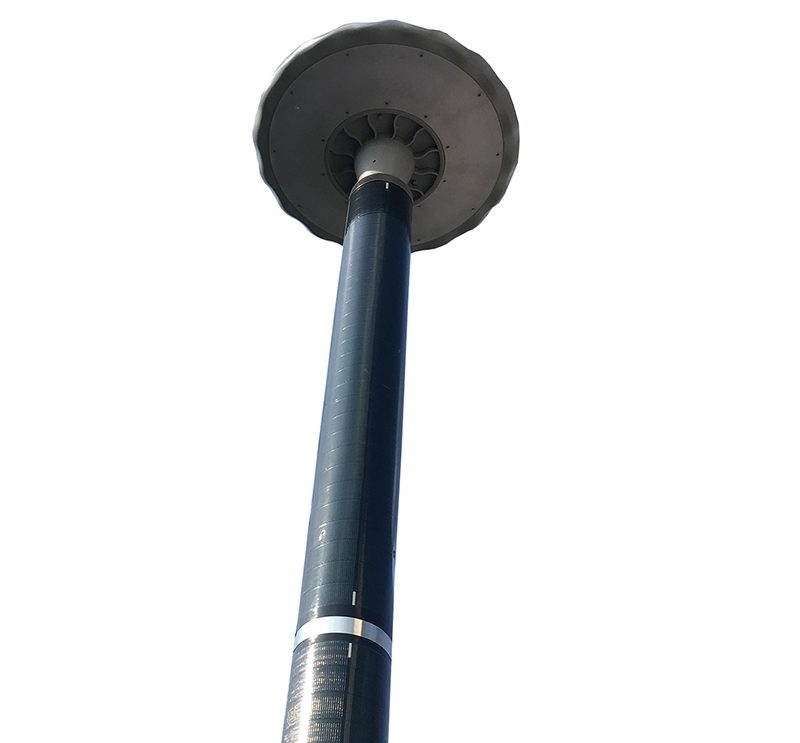
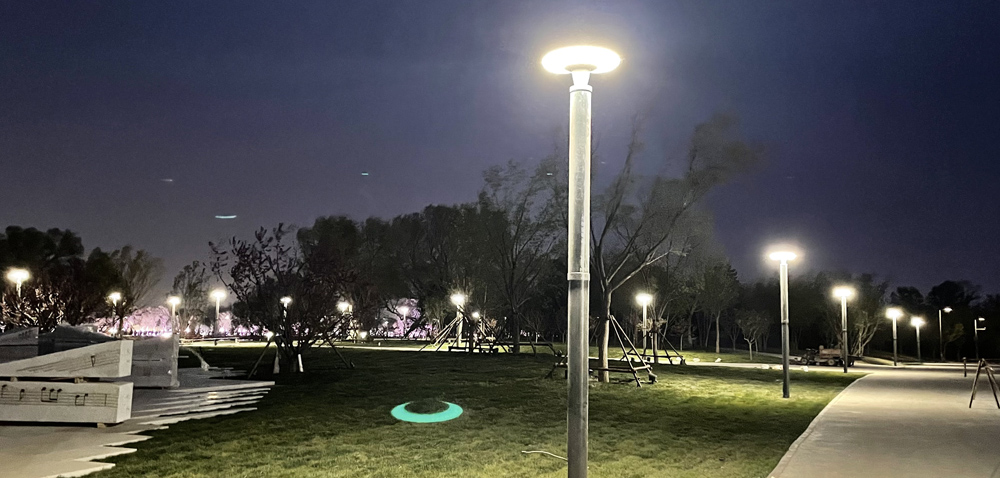
Solar Wrap Garden Light — Vertical panel design performs strongly in partially shaded urban and garden environments.
The performance advantage of vertical solar panels becomes most pronounced in the environments where solar street lights are most needed — cities, where buildings cast shadows; high-latitude regions, where the sun stays low in the sky; and locations with frequent cloud cover.
Urban Canyon Performance
In dense urban environments — often called “urban canyons” — tall buildings block direct sunlight for much of the day. A flat panel may receive direct sun for only 1–3 hours per day in such settings, dramatically reducing energy harvest. A cylindrical vertical panel has a critical advantage: it can capture reflected light from building surfaces, the road surface, and even passing vehicles. Studies of vertical PV installations in urban canyons show that reflected light contributes 25–45% of total daily energy generation — a contribution that flat panels, oriented skyward, cannot effectively utilize.
Cloudy and Overcast Conditions
In overcast conditions, sunlight is predominantly diffuse — scattered by cloud cover into soft, directionless illumination. Flat panels respond poorly to diffuse light because much of it arrives at angles too oblique to be captured. Cylindrical panels capture diffuse light more effectively because their curved surface presents a favorable angle to a larger proportion of the incoming scattered light. This advantage is quantified as the “diffuse light capture ratio” — the percentage of available diffuse light that the panel can convert to electricity. For flat panels: approximately 40–50%. For cylindrical panels: approximately 65–80%.
Cities in Northern Europe (London, Berlin, Copenhagen), the Pacific Northwest (Seattle, Vancouver), and the Northeastern United States (New York, Boston) experience 50–70% overcast days annually. In these markets, the diffuse light advantage of vertical solar panels translates directly to more reliable street light performance through the darkest months.
High-Latitude and Winter Performance
At latitudes above 45° (most of Europe, Canada, the Northern United States), the winter sun never rises above 20–30° elevation. A flat panel tilted at 30° receives near-perpendicular sunlight at midday but is completely shadowed in the early morning and late afternoon. A vertical panel with 360° capture surfaces collects low-angle winter sun from sunrise to sunset. This can mean 4–6 additional hours of effective charging per day in winter compared to an equivalently-rated flat panel system.
Wind-Resistant Structural Design for Extreme Weather
Wind loading is the most critical structural consideration in solar street light design. The cantilevered flat panel on a traditional solar street light creates a significant lever arm that multiplies wind forces on the pole and foundation. Vertical cylindrical panels fundamentally change the structural dynamics.
The Sail Effect — A Design Flaw in Flat-Panel Systems
A flat solar panel mounted on top of a pole acts like a sail. In a 160 km/h wind (Category 2 hurricane), a 1.6 m² flat panel (typical for a 100W system) experiences approximately 1,200–1,500 N of lateral force. Because this force is applied at the top of the pole—typically 6–9 meters above the foundation—the bending moment at the base is 7,000–13,500 N·m. This requires: a heavy-duty tapered steel pole (often schedule 40 or heavier), a reinforced concrete foundation (0.5–1.0 m³ of concrete), and a substantial mounting bracket rated for the combined wind load.
How Vertical Cylindrical Design Mitigates Wind Load
A cylindrical vertical solar panel presents a fundamentally different wind profile. The panel surface is the pole surface — the wind flows smoothly around it. The drag coefficient of a cylinder (0.7–0.9) is approximately 60% lower than that of a flat plate (2.0–2.2) oriented perpendicular to the wind. Moreover, because the panel is a wrap around the pole rather than a cantilevered extension, there is no lever arm magnification. The wind load is distributed evenly along the pole length.
The practical result: a vertical solar street light can use a lighter pole, a smaller foundation (60–70% less concrete), and no heavy mounting bracket.
Coastal and Cyclone-Zone Performance
Vertical solar street lights with wrap-panel construction have been successfully deployed in coastal environments including the Caribbean, Southeast Asian typhoon belts, and Pacific Island nations. The combination of low wind profile, corrosion-resistant aluminum construction, and the elimination of cantilevered brackets makes them the preferred choice for extreme weather applications. In Florida, vertical solar street lights have been approved for installation where flat-panel solar lights failed structural certification tests.
Dust-Resistant and Low-Maintenance Operation
The Dust Accumulation Problem
Flat solar panels accumulate dust, pollen, bird droppings, and industrial fallout. In dry climates, this can reduce charging efficiency by 15–40% between cleaning cycles. Each 1% reduction in panel transmissivity translates to a 1.2–1.5% reduction in energy generation. Vertical solar panels, by contrast, present a near-vertical surface. Dust particles are less likely to adhere, and rainwater runs down the surface, carrying away accumulated debris. Natural rainfall alone is often sufficient to maintain vertical panels at >95% of clean efficiency year-round.
Snow Shedding in Winter Climates
Snow accumulation is arguably the single biggest operational problem for flat-panel solar street lights in cold climates. A 5 cm snowfall can completely block a flat panel. Vertical solar panels shed snow naturally. Snow either slides off the vertical surface (particularly if the panel has a smooth ETFE lamination) or is carried away by wind. Even in heavy snow conditions, vertical panels typically retain 40–70% of their surface area exposed above the accumulated snow line.
Reduced Cleaning Frequency
- Flat panel: Clean every 1–3 months in dusty/agricultural areas; every 3–6 months in urban areas; after every snowfall.
- Vertical cylindrical: Clean every 6–12 months in dusty/agricultural areas; every 12–24 months in urban areas; self-cleaning in rain. No snow removal needed.
Aesthetic Integration in Modern Landscape Architecture
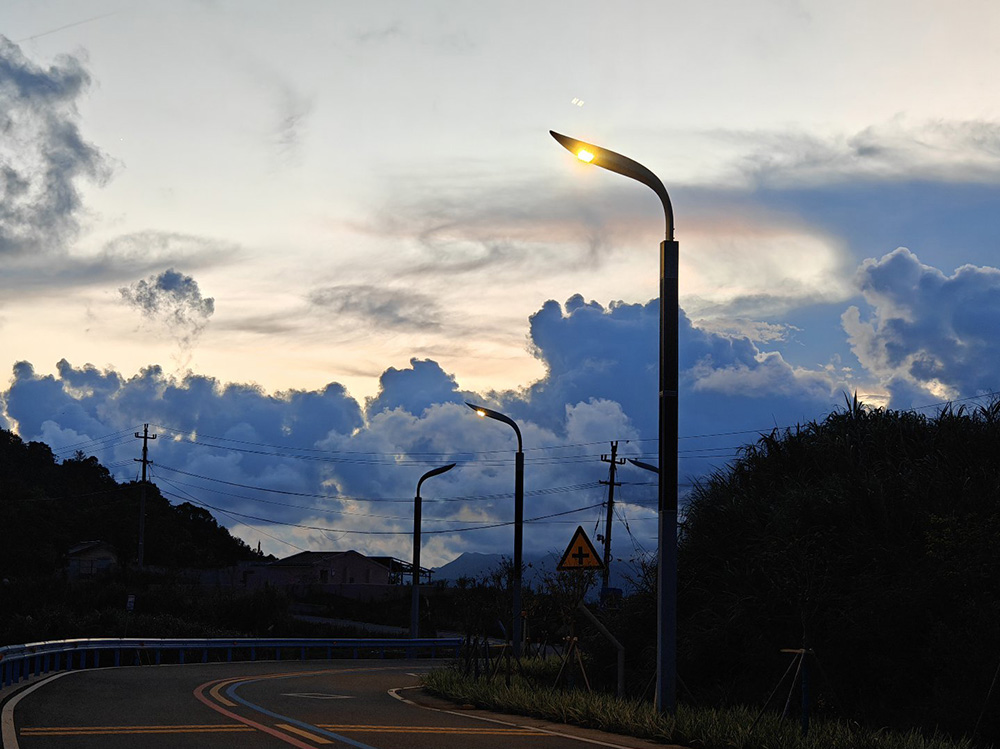
Solar Wrap Custom Pole — The cylindrical design integrates seamlessly into modern and heritage streetscapes alike.
In landscape architecture and urban design, the appearance of street lighting is as important as its performance. Vertical solar street lights offer aesthetic advantages that are increasingly recognized by architects, urban planners, and design review boards.
The Visual Continuity Advantage
A traditional flat-panel solar street light consists of three visually distinct elements: the pole, the bracket or arm, and the solar panel. The solar panel dominates the silhouette. A vertical solar street light reduces the composition to two elements: the pole (which includes the integrated solar panel) and the luminaire. The result is a cleaner silhouette that reads as a street light first and a solar device second.
Heritage and Conservation Area Applications
Many heritage streetscapes have strict design guidelines that prohibit visible solar panels. Vertical solar street lights can be manufactured to match the appearance of traditional street light poles. XM Newlight Solar Wrap systems can be custom-finished in any RAL color to match existing street furniture, making vertical solar lighting viable in contexts where flat-panel solar lighting has been consistently rejected.
Design Versatility
- Profile flexibility: Square, hexagonal, octagonal, or round pole cross-sections available.
- Color matching: Any RAL or custom color for the pole and panel frame.
- Height range: 3–12 meters for different application scales.
- Luminaire compatibility: Compatible with decorative lanterns, modern LED luminaires, or integrated fixture heads.
- Surface finish: Smooth, textured, or patterned panel surfaces available.
Applications: Cities, Roads, Parks, Coasts and Off-Grid Areas
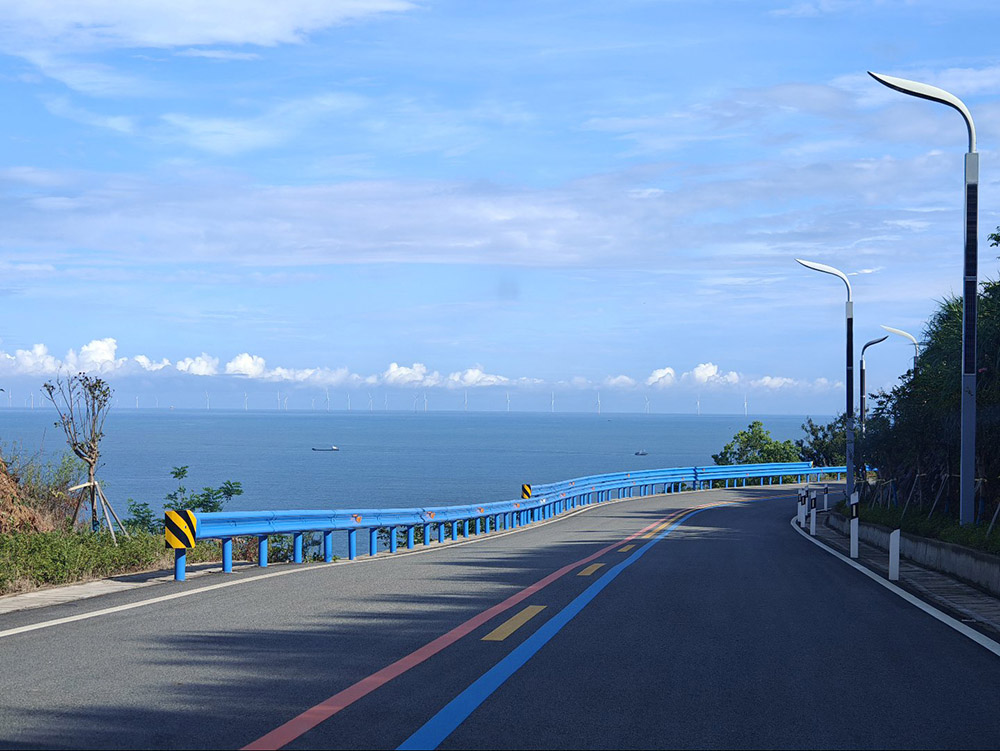
Urban Streetscapes and Municipal Lighting
Cities are the primary market. Applications include: primary and secondary road lighting, pedestrian boulevards, public squares, and bus stops. Case studies show vertical solar street lights reduce municipal lighting energy costs by 60–80% while virtually eliminating maintenance labor for panel cleaning.
Parks, Gardens, and Recreational Areas
The 360° capture surface finds sunlight even in partially shaded park settings, and the integrated design is vandal-resistant. Garden-scale vertical solar lights are increasingly specified for park pathways, picnic areas, and sports facility perimeters.
Coastal and Marine Environments
Vertical solar street lights with marine-grade aluminum construction have proven themselves in boardwalks, beach access pathways, marinas, and coastal promenades. The reduced wind load makes them the preferred choice for coastal installations globally.
Highways, Roadsides, and Infrastructure
Installed along highway rest areas, tunnel approach zones, pedestrian overpasses, and intersections. The self-cleaning panel surface and reduced wind load are particularly valuable where maintenance access is difficult and costly.
Off-Grid and Rural Electrification
Applications include rural village road lighting, refugee camps, mining sites, and temporary construction lighting. The integrated design makes vertical solar lights significantly faster to deploy. A single person can install a 4 m vertical solar street light in under 30 minutes.
Connect With Us
Visit us at www.xmnewlight.com to explore our complete range of Solar Wrap and vertical solar lighting solutions.
— Xiamen Newlight Energy Co., Ltd. —
Email: sales@xmnewlight.com
Tel: +86 592 6890877
Smart Solar Poles for IoT-Enabled Infrastructure
The vertical solar street light pole is not merely a lighting device — it is an ideal platform for the Internet of Things (IoT) infrastructure that defines smart city development. The cylindrical pole structure provides mounting points, power supply, and data connectivity options.
Integrated Smart City Capabilities
- Adaptive LED lighting: Dimming and brightening based on real-time ambient light and traffic flow, reducing energy consumption by 40–60%.
- Motion sensors (PIR and radar): Detecting pedestrian and vehicle movement for demand-responsive lighting.
- CCTV cameras: Solar-powered security cameras for public safety and traffic monitoring.
- Environmental sensors: Monitoring air quality, temperature, humidity, noise levels, and UV index.
- Wi-Fi and cellular connectivity: The pole serves as a smart city communications node.
- Electric vehicle (EV) charging: Integrated charging points for e-bikes and e-scooters.
- Digital signage: Information displays for public transport and emergency alerts.
The Power Advantage of Vertical Solar for Smart Poles
The broader, more consistent energy generation profile of vertical cylindrical panels accumulates more total daily energy than a flat panel’s 4–6 hour peak, providing surplus power for IoT devices. In many installations, a vertical solar pole can support 15–30W of continuous IoT load in addition to the lighting load.
Centralized Management and Data Analytics
Smart solar poles connect to central management platforms providing real-time monitoring of energy generation, battery state, predictive maintenance alerts, and carbon accounting data for municipal sustainability reporting.
The Future of Architectural Solar Lighting Systems
Vertical solar street lights represent a fundamental rethinking of the relationship between photovoltaic technology and the built environment. Emerging trends include:
- BIPV Integration: Cylindrical wrap technology is extending to building-integrated photovoltaics (BIPV) like columns and facades.
- Higher-Efficiency Flexible Cells: Next-generation cells (HJT, perovskite) will enable vertical poles to generate 30–50% more power from the same surface area.
- Energy Storage Integration: Replaceable battery modules and emerging solid-state battery technology promise 10,000+ charge cycles and 15–20 year service life.
- Urban Power Node: The smart solar pole of 2030 will generate, store, and distribute power while communicating with the grid.
Frequently Asked Questions
What is a vertical solar street light?
A vertical solar street light is a lighting system that integrates solar panels in a cylindrical or wrap-pole design, enabling 360° sunlight absorption and improving performance in both urban and outdoor environments. Unlike traditional solar street lights that mount a flat panel on top of the pole, vertical designs incorporate flexible or segmented solar panels into the pole surface itself, creating a seamless, integrated appearance.
How do cylindrical solar panels improve energy capture?
Cylindrical panels capture sunlight from all directions throughout the day, including direct, reflected, and diffuse light. This broader capture angle extends the effective charging window from 4–6 hours (typical for flat panels) to 8–12 hours per day. The cylinder also captures reflected light from building surfaces and the ground — a significant advantage in urban environments. Field studies consistently show 15–30% higher total daily energy generation compared to equivalently-rated flat panels in real-world conditions.
Are vertical solar street lights more efficient than flat-panel systems?
In real-world conditions, vertical systems often perform more consistently because they do not rely on fixed sun orientation and can better utilize low-angle and diffuse sunlight in cities and cloudy weather. While flat panels may achieve higher peak output during the few hours of optimal sun angle, vertical panels generate power over a longer period each day, accumulating more total energy. The advantage is most pronounced in urban environments, high-latitude regions, and locations with frequent cloud cover.
How do they perform in windy or coastal environments?
The wrap-pole structure reduces wind resistance by allowing airflow to pass smoothly around the cylinder, significantly improving stability and durability in high-wind and coastal regions. The drag coefficient of a cylinder (~0.8) is approximately 60% lower than that of a flat plate (~2.0), meaning vertical solar lights experience substantially lower wind loading. This allows for lighter poles, smaller foundations, and reliable operation in hurricane-prone and typhoon-prone regions where flat-panel solar lights would require prohibitively expensive structural reinforcement.
Do vertical solar street lights require less maintenance?
Yes. The vertical design reduces dust, snow, and debris accumulation, and rainwater naturally cleans the surface, lowering maintenance frequency compared to flat panels. Vertical panels typically require cleaning 2–4 times less frequently than flat panels in equivalent environments. Snow sheds naturally from vertical surfaces, eliminating the need for snow removal that flat-panel systems often require in cold climates.
Where are vertical solar street lights commonly used?
They are widely used in urban roads, parks, highways, coastal zones, industrial areas, rural electrification projects, and smart city infrastructure. Specific applications include: municipal street lighting, park and garden pathways, boardwalks and coastal promenades, highway rest areas, roundabouts, pedestrian bridges, remote village roads, refugee camps, and construction sites.
Can vertical solar poles support smart city technology?
Yes. They can integrate IoT systems such as motion sensors, CCTV cameras, adaptive lighting controllers, Wi-Fi modules, environmental sensors, digital signage, and electric vehicle charging points. The cylindrical pole provides generous internal space for electronics and batteries, while the 360° solar panel generates surplus energy to power IoT devices continuously — a critical advantage over flat-panel systems that lack the extended generation profile needed for 24/7 IoT operation.
What are the main advantages over traditional solar street lights?
Key advantages include: 360° energy capture from all directions throughout the day; better wind resistance with 60–80% lower wind loading; improved aesthetics with integrated, discreet solar panels; reduced maintenance through self-cleaning vertical surfaces; more stable year-round output regardless of season; damage-resistant construction without vulnerable cantilevered brackets; and full smart city IoT integration capability.
What is the cost comparison between vertical and traditional solar street lights?
The initial purchase price of a vertical solar street light is typically 10–25% higher than an equivalent flat-panel system. However, total cost of ownership over a 10-year design life is 15–30% lower for vertical systems due to: reduced maintenance costs, lower structural costs, and longer effective lifespan. For municipalities and large-scale projects, vertical solar street lights are increasingly the more economical choice.
Can XM Newlight manufacture custom vertical solar poles for specific projects?
Yes. XM Newlight Energy specializes in custom Solar Wrap panel systems for cylindrical, square, hexagonal, and triangular pole geometries. We can manufacture to any pole height (3–12 meters), any pole cross-section dimension, any RAL color, and any power requirement (30W–200W per pole section). Our engineering team works with project specifiers to design integrated pole systems that meet local wind codes, aesthetic requirements, and performance targets.
The Vertical Solar Panels Wrap On Pole Revolution
The transition from flat-panel to vertical cylindrical solar street lights represents one of the most significant advances in outdoor lighting design since the introduction of LED technology. By rethinking the fundamental geometry of how solar panels integrate with light poles, engineers have unlocked a cascade of benefits that make solar lighting viable for a vastly expanded range of applications.
At XM Newlight Energy, our Solar Wrap series has been at the forefront of this technology transition for over a decade. Thousands of installations across 50+ countries have proven the performance, durability, and aesthetic quality of cylindrical solar panel integration in real-world conditions.