


1. What Are Outdoor Solar Lights and How They Work
Outdoor solar lights are self-contained lighting fixtures that harness sunlight during the day and convert it into electrical energy to power LED lamps after dark. They represent one of the most practical and accessible entry points into renewable energy for homeowners, businesses, and municipalities alike.
At their core, solar lights consist of four essential components working in harmony:
- The photovoltaic panel — typically monocrystalline or polycrystalline silicon — captures sunlight and converts it into direct current (DC) electricity. Higher-efficiency panels (above 18%) charge faster and perform better in cloudy conditions.
- A rechargeable battery pack, usually lithium-ion or lithium iron phosphate (LiFePO₄), stores the generated electricity for use after sunset. Battery capacity is measured in milliamp-hours (mAh) or watt-hours (Wh), and directly determines how long the light can operate.
- An LED light source provides illumination with exceptional energy efficiency. Modern solar lights use surface-mounted device (SMD) LEDs that deliver high lumen output while consuming minimal power.
- A smart controller manages the entire system — regulating charging during the day, automatically switching the light on at dusk, and optionally activating motion sensors or dimming modes to conserve battery life.
During daylight hours, the photovoltaic panel generates electricity that flows into the battery through a charge controller. This controller prevents overcharging (which can damage batteries) and reverse current flow at night. When ambient light levels drop below a preset threshold at dusk, the controller closes the circuit and the LED turns on, drawing power from the stored battery energy.
Modern solar lights have evolved far beyond the dim, unreliable fixtures of a decade ago. Today premium models feature MPPT (Maximum Power Point Tracking) technology that extracts up to 30% more energy from the solar panel, adaptive lighting algorithms that adjust brightness based on remaining battery capacity, and modular designs that allow the solar panel to be mounted separately from the light fixture for optimal sun exposure.
2. Types of Outdoor Solar Lights for Every Application
Not all outdoor solar lights are created equal. Each type serves a distinct purpose, and understanding the differences is essential for making the right choice.
Solar Path Lights
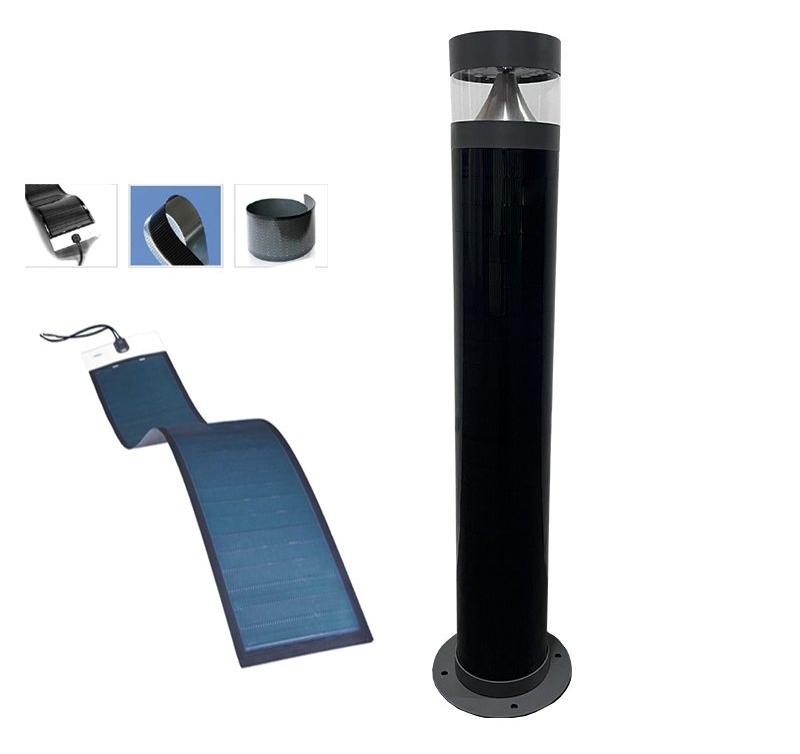
Designed to line walkways, driveways, and garden borders. These low-profile fixtures typically emit 15–80 lumens and create a warm, welcoming glow. They are available in stake-mounted and surface-mounted variants. For wider paths and higher traffic areas, 100–200 lumen models provide superior visibility without glare.
Solar Garden Lights
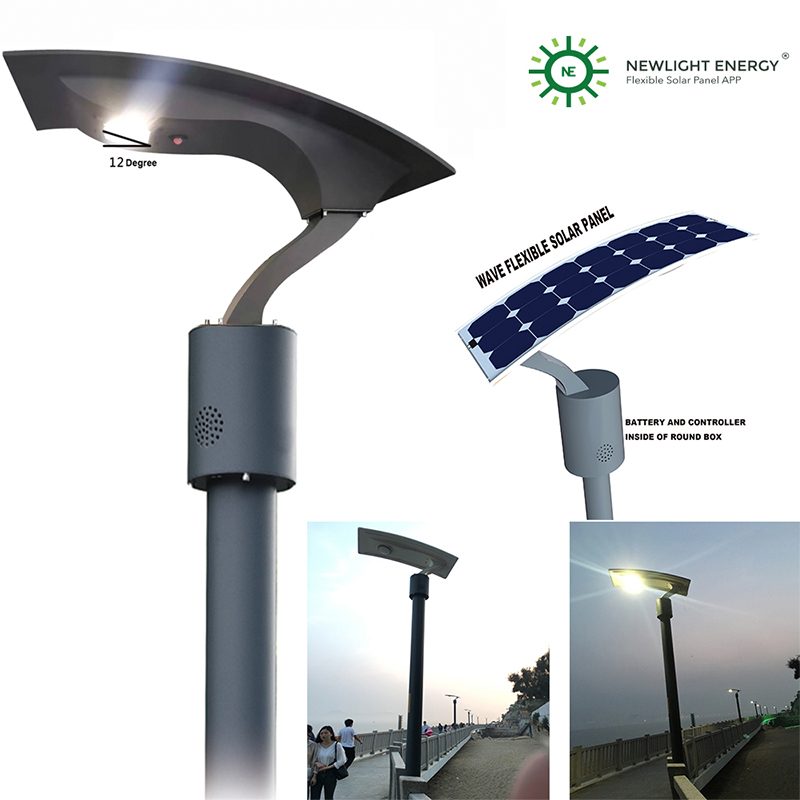
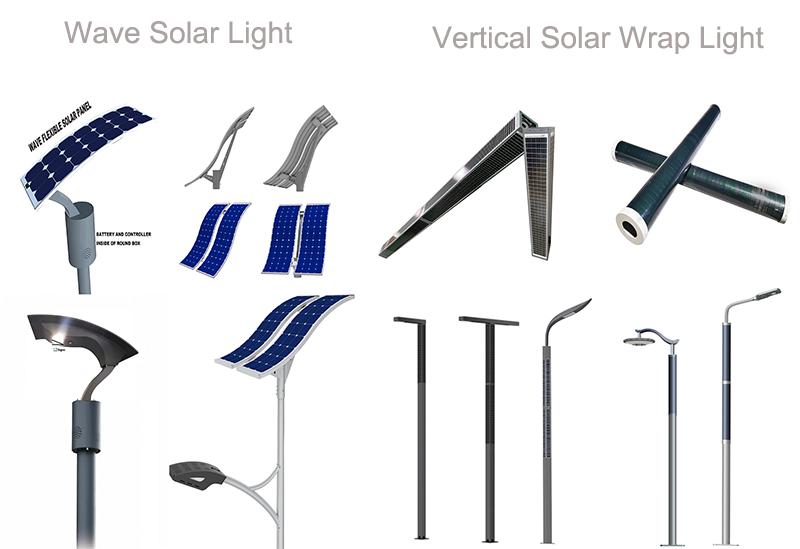
Wave Solar Garden Light — Day view showing the semi-flexible solar panel designFor security and area lighting, solar garden lights deliver 700 to over 2,200 lumens of powerful illumination. They typically feature motion sensors with adjustable detection ranges (up to 10 meters) and wide beam angles (120°–270°). Modern solar garden lights use high-capacity LiFePO₄ batteries and can run for 12 hours on a single charge. Many models now integrate with smart home systems via Wi-Fi or Bluetooth.
Solar Street Lights
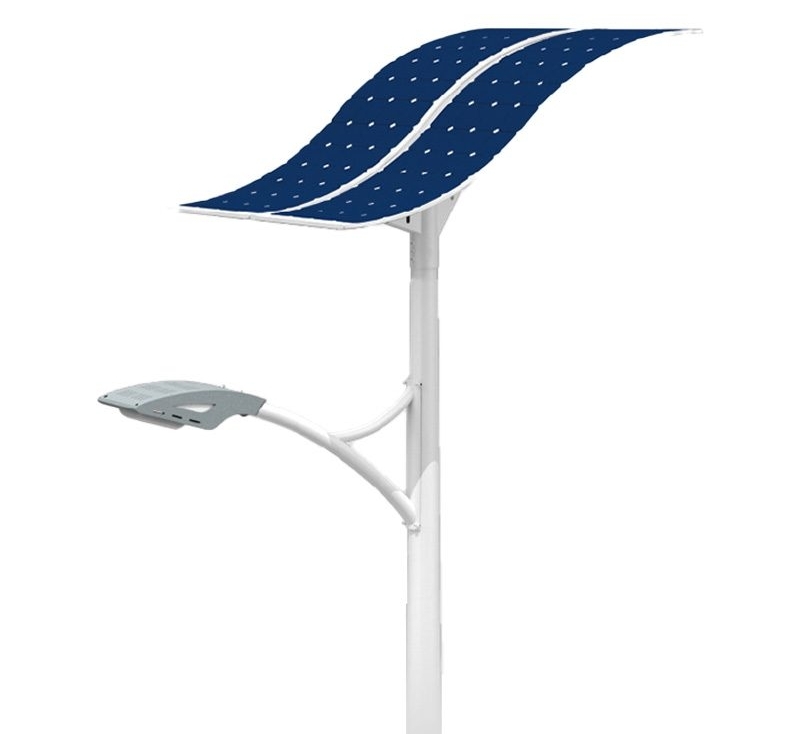
Wave Solar Street Light — A high-output solar lighting solution for roads, parking lots, and public spaces.Designed for municipal and commercial applications, solar street lights deliver 30W to 100W of LED output, equivalent to 3,000–12,000 lumens. These systems are engineered for reliability — featuring LiFePO₄ batteries with more than 10-year lifespans, MPPT charge controllers, and dusk-to-dawn photocell sensors. Solar street lights are the backbone of off-grid public lighting projects worldwide.
Solar Wrap Panel Systems
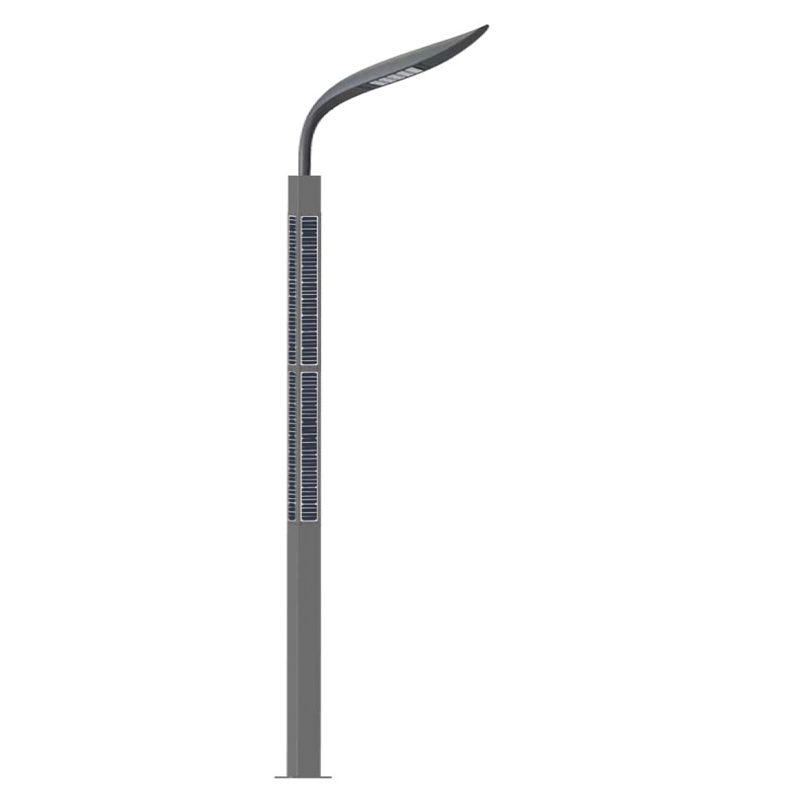
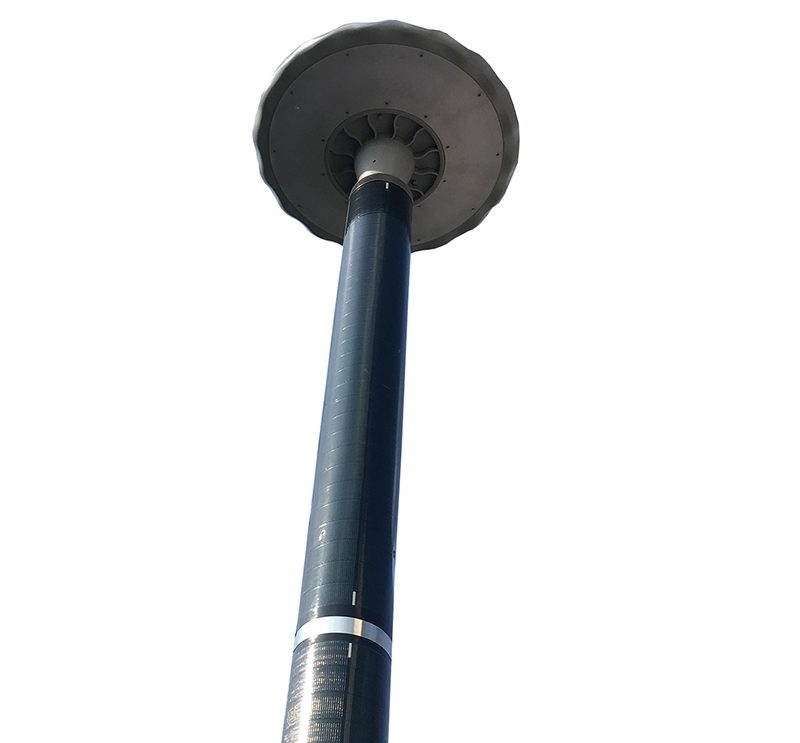
Solar Wrap Custom Pole — Flexible solar panels designed for square, hexagonal, and cylindrical structures.An innovative category of solar lighting that integrates flexible solar panels directly into the structure of the light pole. Solar Wrap systems use custom-molded panels that conform to square, hexagonal, triangular, or cylindrical pole geometries. This design eliminates the need for a separate solar panel mounted above the light fixture, creating a seamless, vandal-resistant, architecturally elegant solution.
3. Key Benefits of Switching to Solar-Powered Outdoor Lighting
The shift from grid-connected to solar-powered outdoor lighting is accelerating for compelling reasons:
Zero Electricity Costs
After the initial purchase, solar lights cost nothing to operate. The energy is free, the fuel is abundant, and there are no monthly bills. For a property with 20 outdoor lights running 10 hours per night, this translates to hundreds of dollars saved annually compared to grid-powered alternatives.
Simple Installation, Zero Trenching
Traditional outdoor lighting requires trenching, conduit, junction boxes, and licensed electricians — a process that can cost $50–$150 per linear foot. Solar lights install in minutes with no wiring, no permits, and no specialized labor. Stake-mounted models press into the ground; wall-mounted units attach with screws.
Energy Independence and Resilience
Solar lights continue functioning during power outages. In an era of increasingly frequent grid disruptions from extreme weather events, this resilience is invaluable. Emergency pathways, security perimeters, and critical outdoor areas remain illuminated when grid power fails.
Environmental Contribution
Each solar light eliminates the equivalent of 50–100 kg of CO₂ emissions over its lifetime compared to grid-powered alternatives. For municipalities managing thousands of street lights, the aggregate carbon reduction is significant — often contributing 5–15% toward municipal emissions reduction targets.
Low Maintenance, Long Lifespan
With no bulbs to replace (LEDs last 50,000+ hours), no wiring to corrode, and sealed weatherproof housings, solar lights require minimal upkeep. Battery replacement every 3–5 years is the only recurring maintenance cost. Premium solar street lights with LiFePO₄ batteries can operate for 8+ years before any component needs servicing.
Enhanced Safety and Security
Well-lit outdoor spaces deter intruders, prevent trips and falls, and improve visibility for residents and visitors. Solar lights with motion sensors provide an additional deterrent — sudden illumination surprises would-be intruders and alerts occupants.
4. How We Tested and Evaluated Outdoor Solar Lights
Our evaluation methodology goes beyond the manufacturer specifications to deliver real-world performance data. Each solar light we assess undergoes a rigorous multi-stage testing protocol:
- Laboratory Photometric Testing: We measure actual lumen output, color temperature (CCT), color rendering index (CRI), and beam angle using a goniophotometer in an accredited testing laboratory. This eliminates the gap between advertised specifications and real performance — a notorious issue in the solar lighting industry where some manufacturers inflate lumen claims by 50% or more.
- Real-World Solar Charging Tests: Solar lights are deployed in controlled outdoor environments across multiple seasons. We record charging current, battery voltage, and runtime for 7 consecutive days under varying conditions — full sun, partial cloud, overcast, and simulated shade.
- Weather Resistance Validation: Samples are subjected to IP-rated water immersion tests, UV exposure in a QUV accelerated weathering chamber (simulating 3 years of sunlight in 6 weeks), and salt-spray corrosion testing.
- Long-Duration Runtime Verification: After a full charge cycle, each light is monitored continuously from dusk to dawn until the battery is depleted. We measure not just total runtime, but also light output degradation over the discharge cycle.
- Motion Sensor Accuracy: For lights with motion sensors, we test detection range (advertised vs. actual), detection angle, reaction time, and the duration the light stays on after activation.
- Installation and User Experience: We evaluate ease of installation, mounting hardware quality, instruction clarity, and ongoing user interaction.
5. Key Features to Consider When Buying Outdoor Solar Lights
Navigating the solar lighting market requires understanding which specifications actually matter. Here are the critical features to evaluate:
Solar Panel Efficiency
Monocrystalline panels (18–23% efficiency) outperform polycrystalline (15–18%) and amorphous thin-film (6–10%). For a given surface area, a monocrystalline panel will charge faster and generate more power in low-light conditions. This is the single most important determinant of real-world performance.
Battery Type and Capacity
Lithium-ion batteries dominate the consumer market, offering good energy density at moderate cost. For demanding applications, LiFePO₄ (lithium iron phosphate) batteries deliver 3–5 times the cycle life (2,000–5,000 cycles vs. 500–1,000), superior thermal stability, and consistent performance in extreme temperatures.
Lumen Output and CCT
Lumens measure actual light output. Be skeptical of extraordinary claims — a fixture the size of a smartphone cannot deliver 5,000 lumens without active cooling. For reference: a quality 20W solar street light typically produces 2,000–2,600 lumens. Color temperature (CCT) should be 3,000K (warm white) for residential areas and 4,000K (neutral white) for commercial and security applications.
IP Rating
IP65 (dust-tight and protected against water jets) is the minimum for outdoor solar lights. IP66 and IP67 provide protection against powerful water jets and temporary immersion respectively.
Smart Features
Modern solar lights offer motion sensors (PIR), dusk-to-dawn photocell sensors, programmable dimming schedules, remote control via smartphone apps, and even integration with home automation platforms.
Durability and Materials
Aluminum alloy housings with powder-coated finishes offer superior corrosion resistance compared to plastic housings. Tempered glass panels resist hail and impact. Stainless steel mounting hardware prevents rust staining.
6. Understanding IP Ratings and Weather Resistance
The Ingress Protection (IP) rating system is the international standard (IEC 60529) for classifying the degree of protection provided by electrical enclosures against solid objects and moisture. For outdoor solar lights, the IP rating is arguably the most important specification.
Decoding IP Ratings
IP ratings consist of two digits. The first (1–6) indicates protection against solid objects. The second (1–9) indicates protection against moisture:
- IP44 — Protection against solid objects >1 mm and splashing water from any direction. Suitable for covered patios, but not full outdoor exposure.
- IP65 — Complete dust protection (dust-tight) and protection against low-pressure water jets from any direction. This is the recommended minimum for outdoor solar lights in most climates.
- IP66 — Dust-tight and protected against powerful water jets. Suitable for coastal areas and commercial installations.
- IP67 — Dust-tight and protected against temporary immersion in water (up to 1 meter for 30 minutes).
- IP68 — Dust-tight and protected against continuous immersion beyond 1 meter depth.
Why IP Ratings Matter for Solar Lights
Solar lights are uniquely vulnerable to moisture damage because they have more potential entry points than wired lights. Investing in IP65 or higher is not an upgrade — it is insurance against premature failure.
Additional Weather Considerations
- UV Resistance — Look for UV-stabilized polycarbonate or anodized aluminum housings.
- Temperature Range — Premium solar lights operate from -20°C to +60°C. LiFePO₄ batteries maintain better performance in extreme temperatures.
- Salt-Spray Resistance — For coastal installations, fixtures must have marine-grade corrosion protection (C5-M classification).
7. Installation Guide — Mounting, Staking, and Smart Placement
The performance of any solar light depends more on installation quality than on the light itself.
Choosing the Right Location
- Direct sunlight is essential. The solar panel must receive at least 4–6 hours of direct, unobstructed sunlight daily.
- Avoid shadows from trees, buildings, fences, and overhead power lines.
- Consider seasonal sun paths — a location sunny in summer may be fully shaded in winter.
Mounting Methods
- Stake-Mount — For path and garden lights, simply press the stake into soft soil.
- Wall-Mount — Use the included mounting bracket and stainless steel anchors.
- Pole-Mount — For street lights and high-mounted flood lights, pole-mount brackets allow attachment to round, square, or tapered poles.
Spacing Guidelines
- Path lights: 2–3 meters apart along straight walkways; 1.5–2 meters on curves
- Bollard lights: 3–4 meters apart for pathway illumination
- Flood lights: One fixture per 30–50 m² of coverage area
- Street lights: 10–20 meters apart depending on pole height and lumen output
First-Time Activation
Always allow new solar lights to charge for a full 24–48 hours before expecting full performance. Turn the switch to ON and let the light charge through at least one full day-night cycle before evaluating performance.
8. Maintenance Tips for Long-Lasting Solar Light Performance
Solar lights require minimal maintenance, but a few minutes of care each season can double their effective lifespan:
- Clean the Solar Panels: Clean panels every 2–3 months with a soft, damp cloth and mild soapy water.
- Check Battery Connections: Annually inspect connections for corrosion. Clean terminals with a wire brush if necessary.
- Trim Surrounding Vegetation: Trim back any vegetation within 1 meter of the solar panel that might cast a shadow.
- Inspect Seals and Gaskets: Inspect rubber gaskets annually for cracks or gaps to prevent moisture ingress.
- Prepare for Winter: Tilt solar panels to a steeper angle (45–60°) so snow slides off, and clear heavy snow after storms.
- Replace LEDs When Needed: Quality LED modules last 50,000+ hours. Some modular designs allow the LED board to be replaced separately.
9. Frequently Asked Questions
Do solar lights need batteries?
Yes. Solar lights use rechargeable batteries to store energy collected during the day for nighttime lighting. Premium models use lithium iron phosphate (LiFePO₄) batteries rated for 5–8 years.
Can solar lights stay outside in the rain all year?
Yes, if they have the appropriate waterproof rating. IP65 is recommended for full outdoor exposure, including heavy rain and snow.
Do solar lights need direct sunlight?
Direct sunlight provides the best charging performance. On an overcast day, a solar panel typically generates 10–25% of its rated output. For shaded areas, choose a model with a separate adjustable solar panel.
How many lumens do I need?
Under 100 lumens for decorative lighting; 100–200 for path lighting; 200–700 for patios/entrances; 700–2,200+ for security and commercial applications.
How long do solar lights stay on at night?
Most solar lights run for 10–12 hours after a full charge, depending on battery capacity, sunlight received, and the selected lighting mode.
Motion sensor vs. dusk-to-dawn: Which is better?
Motion sensor lights conserve battery and are ideal for security. Dusk-to-dawn lights provide consistent ambient lighting for pathways and public spaces. Many modern fixtures offer both modes.
Do solar lights work in winter?
Yes, but expect 30–50% shorter runtime. Choose IP65 models, mount panels at a steeper angle (45–60°), and select fixtures with LiFePO₄ batteries for optimal winter performance.
How do I know if a solar light is high quality?
Look for monocrystalline panels, LiFePO₄ batteries, IP65+ rating, aluminum/stainless steel housing, published IES data, and a 2+ year warranty.
Can I mix different types of solar lights in one outdoor space?
Absolutely. Layering different types of solar lighting creates visual depth. Maintain consistent color temperatures (e.g., all 3,000K warm white) for a cohesive look.
What is the payback period for solar lighting compared to wired lighting?
For residential applications, payback is immediate. For commercial projects, it is typically 2–4 years. Over a 10-year lifecycle, solar lighting systems achieve a 40–60% total cost reduction.
Lighting the Future — One Solar Fixture at a Time
The outdoor solar lighting industry has crossed a critical threshold. Today quality solar lights match — and in many applications exceed — the performance of grid-connected alternatives while delivering zero operating costs, complete energy independence, and a dramatically smaller environmental footprint.
Whether you are illuminating a residential garden path, lighting a municipal streetscape, or designing the next generation of smart city infrastructure, the technology is ready. The key is choosing the right product for your specific application, installing it with care, and maintaining it with the modest attention it deserves.
At XM Newlight Energy, we are committed to advancing solar lighting technology through continuous innovation in solar panel integration, battery management, and intelligent control systems. Our Solar Wrap and Wave Solar Light series represent the current state of the art — but we are already developing the next generation of products that will push the boundaries further.


