


News
How To Use Solar Battery Charger For Boat?
News | Oct 07,2025
Understanding Solar Battery Chargers for Boats
Solar battery chargers for boats use panels to convert sunlight into DC electricity, which then flows through a charge controller to safely charge and maintain the boat’s batteries.
This system consists of solar panels, a charge controller, and batteries, and provides a clean, renewable power source for onboard electronics without relying on a running engine or shore power. The charge controller is crucial for regulating voltage and preventing overcharging, ensuring battery longevity.

Benefits of Using Solar Chargers on Boats
Solar chargers provide a boat with a reliable, independent, and eco-friendly power source that reduces fuel consumption and costs. They offer a quiet, low-maintenance way to charge batteries and power onboard electronics, extend battery life, and enable longer trips away from shore power.
KEY BENEFITS
Cost savings:
Once installed, solar power eliminates the ongoing cost of fuel and shore power.
Independence:
Solar chargers allow boats to stay out longer by providing a constant, renewable power source, reducing the need to constantly worry about finding a charging station.
Eco-friendly:
They harness clean, renewable energy, producing no emissions during operation and reducing the boat’s environmental impact.
Lower maintenance:
Solar systems require minimal maintenance and can keep batteries charged, preventing them from discharging completely when the engine is off.
Quieter operation:
Unlike generators, solar chargers operate quietly, enhancing the peace on the water.
Improved battery health:
Consistent, gentle charging helps maintain a healthy battery charge and can extend the overall life of the battery.
Reliable power source:
Solar energy provides a consistent power supply for essential systems like navigation and communication, especially during extended trips or emergencies.
Choosing the Right Solar Panels for Boat
To choose the right solar panels for a boat, you must first calculate your daily energy needs and then select a panel type and size that fits your budget, boat’s structure, and energy requirements. Key considerations include panel type (rigid for permanent, flexible for curved surfaces), durability (look for high IP ratings, UV resistance, and saltwater resistance) and efficiency of solar panels.
Calculate your energy needs
List all devices:
Make a list of all electronics and appliances you want to power with solar energy.
Calculate daily consumption:
Determine the wattage of each device and estimate its daily hours of use to calculate the total daily watt-hours (Wh) needed. A simple formula is: Daily Wh= each device Wattage* how many Hours per day;
Determine battery capacity:
Calculate the required battery capacity based on your daily energy consumption, system voltage, and the type of battery.
Choose the right panel type and size
Rigid panels:
Best for larger boats with ample flat space. They are very durable, efficient, and can withstand harsh marine conditions, but are heavier and less flexible.
Flexible panels:
Ideal for boats with curved surfaces or for weight-conscious vessels. Some can be walked on lie CIGS amorphous solar panel;
Semi-flexible panels:
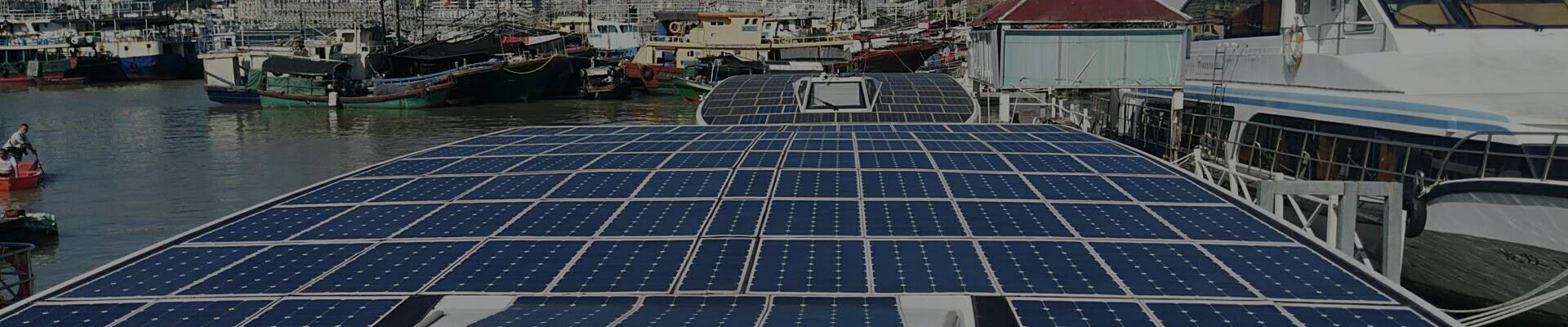
A good compromise, offering more durability than standard flexible panels while still being adaptable to slightly curved surfaces. price is not high good for user acceptable, and no need big structure bracket on boat,it is the best choices for solar panels on boat.
Space and weight:
Measure the available space and consider the weight of the panels, as every pound can affect stability.
Installation:
Understand the complexity of the installation. Rigid panels require secure mounting, while flexible panels are often easier to install but require careful attention to adhesion.
Budget:
Set a budget and factor in the costs of the panels, charge controller, wiring, and installation.

Installation Process
The solar boat installation process involves mounting the panels, connecting the wiring to a charge controller and battery, and testing the system. First, mount the panels securely on the boat, choosing a location that gets good sun exposure.
Next, connect the solar panels to an MPPT solar regulator (charge controller) using marine-grade cables and waterproof connectors. Finally, connect the charge controller to the boat’s battery and test the entire system to ensure it’s operating correctly.
Mounting the solar panels
- Choose a location on the boat that receives the most direct sunlight. Popular spots include dinghy davits, canvas dodgers, biminis, decks, or hard tops.
- Use marine adhesive for flexible panels or stainless steel structures for rigid ones. If using a frame, mount the rail mounts to the existing frame first, then build the panel frame and attach the panels.
Wiring the system
- Use pre-tinned marine cables to prevent corrosion.
- Connect the solar panels to the charge controller using appropriate connectors. For example, use MC4 connectors on both the panel and the cable if your panels have them.
- Connect the charge controller to the boat’s battery bank. A dual-output regulator can be used to charge both the house and engine batteries.
- Ensure all connections are watertight using proper sealing techniques.
- If you are not comfortable with electrical work, hire a professional to avoid mistakes like short circuits that can damage the system or cause fires.
Testing the system
- Connect the charge controller to the battery first, then connect the solar panel. This allows the regulator to detect the battery voltage.
- Check the system’s voltage and overall operation to ensure everything is working as expected.
- Verify the charge controller is regulating the charge correctly and that the batteries are charging properly.
Make any necessary adjustments to fine-tune the system’s performance.

Conclusion
Charging your marine battery with a solar panel is a practical and environmentally friendly approach to powering your boat. By understanding the fundamentals, selecting the right equipment, and implementing proper installation and maintenance practices, you can enjoy the benefits of solar power while out on the water.
Embracing solar technology not only enhances your boating experience but also contributes to a cleaner and more sustainable marine environment.
In conclusion, the integration of solar power to charge your marine battery is a step towards a greener and more efficient boating experience. With the right equipment and proper implementation, you can harness the power of the sun to keep your marine battery charged, all while reducing your environmental impact.
In conclusion, the integration of solar power to charge your marine battery is a step towards a greener and more efficient boating experience. With the right equipment and proper implementation, you can harness the power of the sun to keep your marine battery charged, all while reducing your environmental impact.
NEWLIGHT ENERGY is one leading flexible solar panel manufacturers, provide custom flexible solar panels for different solar boats.

--- END ---


