

Solar power is an attractive way for businesses to cut energy costs and meet sustainability goals. However, many commercial and industrial (C&I) buildings struggle with the practicalities of installing traditional solar panels.
Heavy, rigid panels require sturdy roof structures and extensive mounting hardware, which many facilities cannot accommodate. In fact, industry estimates suggest that roughly 30–40% of commercial roofs lack the load capacity to support conventional solar arrays. This leaves decision-makers asking: are flexible solar panels worth it as an alternative solution?
For C&I buyers, this question is about real-world value and return on investment (ROI). If flexible solar panels can provide energy savings without costly structural upgrades or operational disruptions, they could be a game-changer.
In this article, we explore flexible panels on their own terms – from how the technology works to its advantages, limitations, and ideal use cases in commercial contexts. The goal is to help you determine if flexible solar panels make sense for your business.
Understanding Flexible Solar Panel Technology
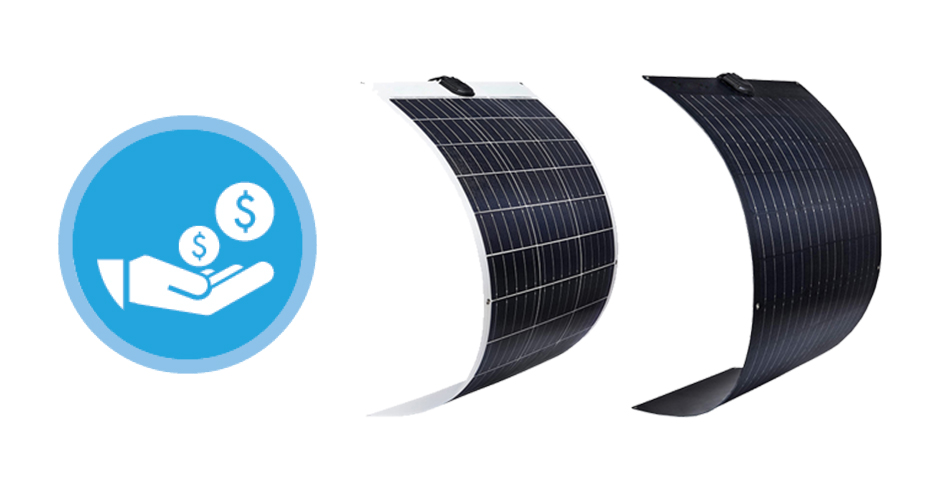
Flexible solar panels are a modern twist on photovoltaic technology, designed to bend and adapt where traditional panels cannot.
Unlike rigid glass-and-metal modules, flexible panels use thin, lightweight materials that allow them to flex without cracking. Typically built on a bendable plastic or metal foil substrate, they incorporate thin-film solar cells or ultra-thin silicon cells.
Over the years, the design and performance of flexible panels have improved significantly. At the beginning, the core technology was from the USA, UNISOLAR TO SUNPOWER, but now in China, following solar technology developing swiftly and economically, mono solar cell is similar to SUNPOWER efficiency, even higher, but the price is much lower.
Advantages in Commercial and Industrial Applications
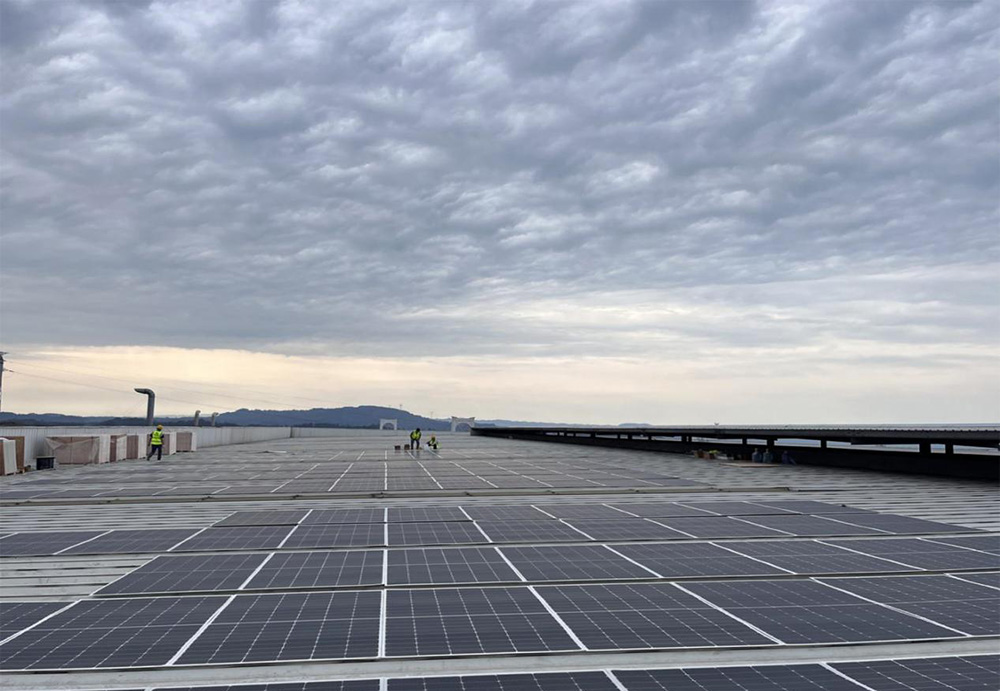
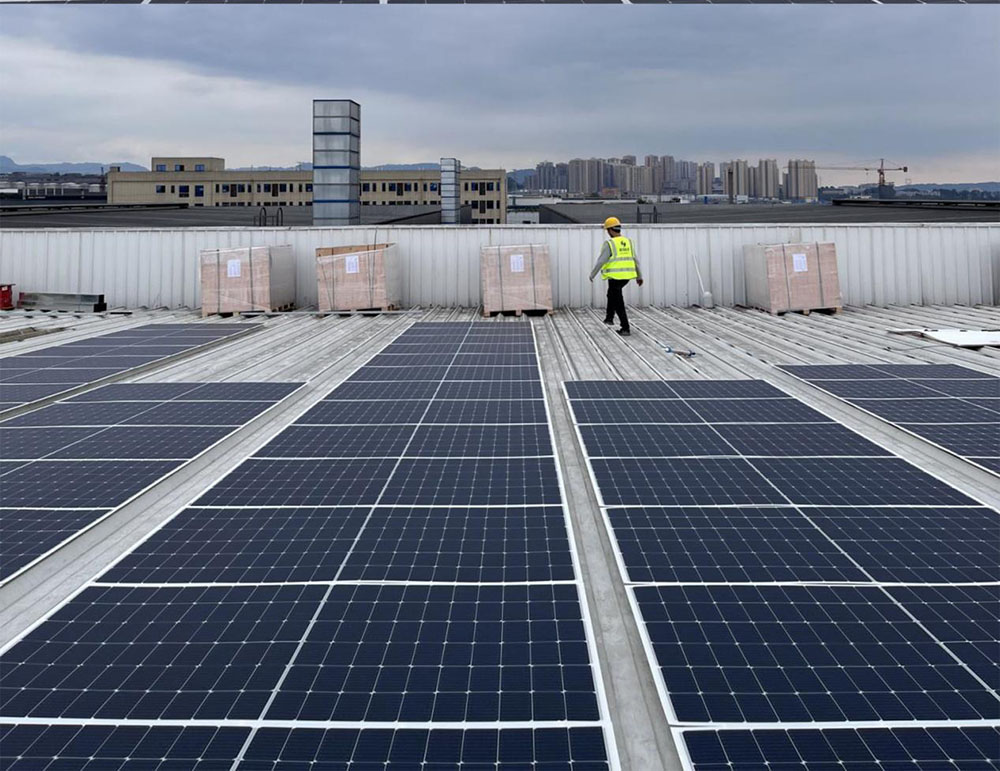
Flexible solar panels are installed flat on an industrial roof, conforming to the surface without heavy racks or mounting structures. Flexible panels can be installed nearly flush.
Somewhere, the roof of a building needs a lightweight solar panel, a flexible solar panel with the advantage of only 1/3 light weight to meet the request, and with high efficiency, the price is better and better to close to rigid solar panels now.
Lightweight, Low-Profile Design
A typical flexible panel weighs a fraction of a standard solar module that often on the order of 80% lighter per square foot. This drastically reduces the load on rooftops.
Buildings that could never support heavy glass panels, such as older warehouses with lightweight roofs, can safely install flexible panels without structural reinforcements. The slim profile also means the panels sit close to the roof surface, reducing wind load and keeping the installation unobtrusive.
Versatile Placement on Complex Surfaces
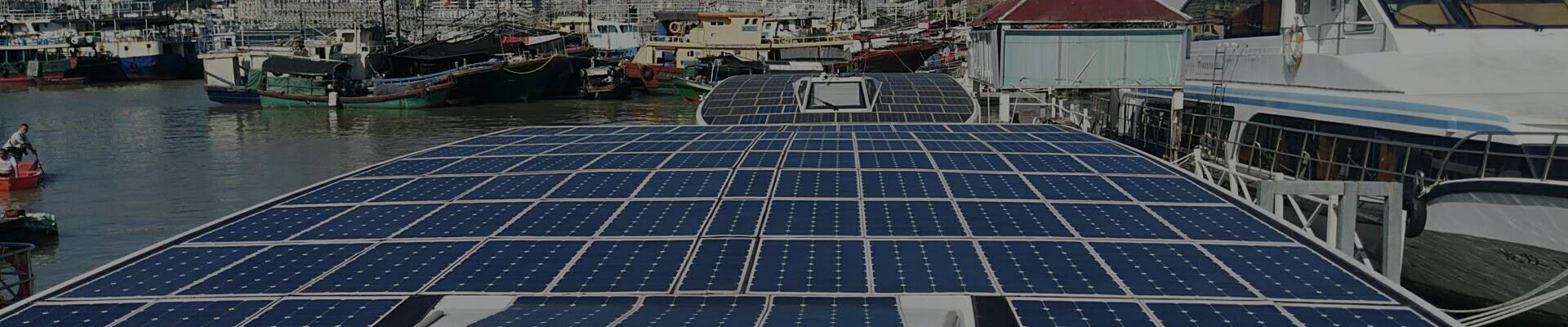
They can conform to surfaces that are curved, uneven, or even vertical – opening up areas like arched roofs, domes, and building facades for solar. Their bendability also makes them ideal for vehicles or portable equipment.
For example, lining a truck roof or mobile unit to generate power on the go. In other words, businesses can turn more of their available surface area into energy-producing real estate by using flexible panels.
Quick Installation with Minimal Disruption
Because they are lightweight and often attach with adhesives or simple fasteners, flexible panels can be installed faster and with less hassle than traditional systems. There’s usually no need for bulky mounting racks or roof penetrations.
For a busy facility, this means little to no downtime. A flexible panel array can often be deployed without shutting down operations or bringing in heavy equipment. Faster, simpler installation can also translate to lower labor costs on a project.
Higher Upfront Cost per Watt
Flexible solar technology is still a specialty market, so the panels often come at a premium price. The up-front investment is higher for the same capacity compared to standard panels. However, you also save on mounting hardware and potential structural work that rigid panels might require, which can help offset the premium.
Assessing Return on Investment
The real-world value of flexible solar panels for a business comes down to return on investment. Here is how to think about ROI in this context:
Upfront Costs vs. Installation Savings
While you may pay more for the panels themselves, you could save on installation. Flexible panels eliminate the need for heavy racking systems and roof reinforcements, which can significantly reduce labor and materials expenses.
If a conventional solar install would have required expensive upgrades to your building, a lightweight flexible panel system avoids that cost. In many cases, the overall project cost of a flexible array can be competitive with a traditional system when all factors are considered.
Energy Production and Payback Period
Many businesses with flexible installations still see solid reductions in their energy bills and achieve payback in a reasonable timeframe – especially if they take advantage of solar incentives and tax credits.
Longevity and Maintenance Costs
When planning ROI, consider that you might need to replace flexible panels earlier than traditional ones. Your financial projections should include a potential panel replacement or upgrade around the 10- to 15-year mark.
On the maintenance side, costs are usually low for any solar array. With flexible panels, the main tasks are keeping them clean and periodically checking that the adhesive or mounts remain secure.
With no glass to crack, there’s one less failure mode to worry about. By staying on top of basic upkeep, businesses can ensure their flexible solar investment continues to deliver value throughout its expected life.
Who Should Consider Flexible Panels?
Flexible solar panels shine in specific scenarios. Commercial and industrial buyers in the following situations should give them strong consideration:
- Facilities with Weight-Restricted Roofs: Older buildings, thin metal warehouse roofs, or structures that can nothandle added loads are prime candidates for lightweight solar solutions.
- Buildings with Curved or Irregular Surfaces: If your roof is not flat or has an unusual shape, flexible panels can cover areas that rigid panels cannot, enabling solar on unconventional structures.
- Operations Requiring Minimal Disruption: Businesses that can notafford installation downtime (factories, hospitals, data centers) benefit from the quick, non-intrusive installation that flexible panels offer.
- Mobile and Remote Applications: Companies using trucks, buses, trailers, or off-grid equipment can install flexible panels to generate power on the move or at remote sites.
- Aesthetic or Space-Constrained Projects: Where traditional panel racks would be an eyesore or will not fit (like building facades or small structures), thin flexible panels offer a subtler alternative.
- If you see your situation on this list, flexible panels might be worth a closer look. They solve problems that might otherwise prevent a solar project altogether.
Real-World Use Cases and Emerging Trends
Flexible solar technology is gaining traction in the commercial and industrial landscape, with more businesses discovering its potential in real-world settings. Warehouses with low-load-bearing rooftops have successfully installed thin-film flexible panels, transforming previously unusable roof space into productive solar energy zones.
In the agricultural sector, curved greenhouse structures have adopted semi-transparent flexible strips that generate power while still allowing sufficient light for crop growth.
Logistics fleets are integrating flexible panels onto delivery trucks and transport vehicles, using them to charge onboard batteries and reduce fuel consumption for auxiliary systems.
These examples reflect the growing versatility of flexible solar panels across industries. Material science continues to push the limits of what flexible panels can achieve. Innovations such as perovskite solar cells and next-generation polymers are driving higher energy conversion rates and greater durability.
Another emerging trend is building-integrated photovoltaics, where flexible solar layers are directly embedded into construction materials like roofing membranes or architectural cladding.