


One of the most foundational principles in the industry is the 20% Rule for solar panels. Whether you are setting up a portable power station for van-life or a massive rooftop array for a suburban home, this rule is the secret to a system that delivers consistent power regardless of the circumstances.
What Is the 20% Rule for Solar Panels?
In the simplest terms, the 20% rule is a sizing strategy that recommends designing your solar array to produce 20% more electricity than your average monthly energy needs. Instead of building a system that covers exactly 100% of your usage, you aim for 120%.
Think of it as an “energy insurance policy.” If your household typically consumes 1,000 kilowatt-hours (kWh) per month, the 20% rule suggests you install a system capable of generating 1,200 kWh.
That extra 200 kWh is your solar safety margin. This isn’t about wasting capacity; it’s about acknowledging the reality that solar panels rarely operate under “Standard Test Conditions” (STC) once they leave the factory and sit on your roof.
What Will Affect the 20% Rule for Solar Panels?
To understand why the 20% rule is so vital, we must look at the real-world factors that steal energy from your system. No solar setup is 100% efficient.
Here is what eats into that 20% buffer:
Inverter and Wiring Losses
Solar panels generate DC (Direct Current) electricity, but your home runs on AC (Alternating Current). The process of conversion through an inverter typically loses 3% to 5% of the total energy. Additionally, electricity traveling through long runs of copper wiring encounters resistance, which dissipates power as heat.
Environmental Obstacles
Dust, pollen, and bird droppings are the silent enemies of solar production. Even a thin layer of grime can reduce a panel’s output by 10% or more. Furthermore, partial shading, perhaps from a chimney or a neighbor’s tree, can disproportionately affect the performance of an entire string of panels.
Weather and Seasonal Fluctuations
In 2026, while panel technology has improved, we still cannot control the sun. Seasonal changes in the sun’s angle and shorter daylight hours in winter can drastically reduce daily yields. Cloudy weather and high humidity also play a role, making the 120% sizing strategy essential for maintaining a stable supply.
Panel Degradation
Every solar panel loses a small amount of its efficiency each year, typically about 0.5%. Over a 20-year lifespan, your panels might produce 10% less than they did on day one. The 20% rule ensures that even as your equipment ages, it still meets your basic energy requirements.
Is the 20% Rule for Solar Panels Any Good?
Many first-time buyers ask: “Is it actually worth the extra investment?” The answer is a resounding yes. The 20% rule is regarded as a gold standard because it strikes a perfect balance between reliability and cost-effectiveness.
Without this buffer, a system designed to meet exactly 100% of your needs will almost certainly leave you in the dark during a stretch of cloudy days or a particularly busy month.
By adding this 20% cushion, you move from a system that works “most of the time” to one you can genuinely trust for energy independence. In the long run, it is far more expensive to realize your system is undersized and have to retrofit additional panels than it is to build that extra capacity from day one.
How to Calculate the 20% Rule for Solar Panels?
Calculating your 120% target is a straightforward process.
Follow these steps to determine your ideal system size:
Step 1: Determine Your Monthly
Consumption Review your utility bills from the last year. Total the kWh used and divide by 12 to find your average monthly consumption. Let’s say it’s 800 kWh.
Step 2: Apply the 20% Buffer
Multiply your average consumption by 1.2.
800 kWh x 1.2 = 960 kWh. This is your new production goal.
Step 3: Factor in Daily Sunlight (Peak Sun Hours)
Check your local solar map for “Peak Sun Hours” (the number of hours per day the sun is strong enough to generate maximum power).
If your area gets 4 peak sun hours per day:
- 960 kWh / 30 days = 32 kWh per day.
- 32 kWh / 4 hours = 8 kW.
Step 4: Final System Size
According to the rule, you would need an 8 kW system to reliably cover an 800 kWh monthly need.
Does the 20% Rule for Solar Panels Mean Anything Else?
A common point of confusion for homeowners is the difference between the Sizing Rule and the NEC 120% Rule.
While our sizing rule focuses on production, the NEC (National Electrical Code) 120% Rule is a safety regulation for your electrical panel’s busbar. It dictates that the sum of the main breaker and the solar breaker cannot exceed 120% of the busbar’s total rated capacity. For example, if you have a 200-amp busbar, the 120% rule allows for a total of 240 amps.
Both are fundamental to a successful installation: one ensures you have enough power, while the other ensures your electrical panel stays safe from overheating.
When Can You Deviate from the 20% Rule?
While 20% is the industry standard, it is not a rigid law.
There are scenarios where you might choose to deviate:
- Space Limitations: If your roof surface area is restricted, you might only have room for a 1:1 match (100% sizing). In this case, you must prioritise high-efficiency panels to make the most of every square inch.
- Net Metering Programs: If your local utility offers a generous 1-to-1 net metering program, you might not need as large a buffer because the grid acts as your “battery.”
- Battery Storage Integration: If you are using a high-capacity storage system like the Bluetti EP900 or EcoFlow PowerOcean, you might actually want to increase your buffer to 30% or 40% to ensure you can fully charge your batteries even on low-sun days.
- Budget Constraints: If the upfront cost of 120% is too high, it is often better to install a high-quality 100% system designed for easy expansion later.
Common Misconceptions and Tips
Misconception: “The 20% rule is just a sales tactic to get me to buy more panels.” Truth: This rule was developed by engineers, not salespeople. It is a technical response to the inherent inefficiencies of solar hardware and the unpredictability of the environment.
Tip 1: Prioritise Cleaning. A dirty system can lose more than 20% of its power. If you don’t clean your panels regularly, your “buffer” will be consumed by dust rather than powering your home.
Tip 2: Monitor Real-Time Data. In 2026, most systems come with AI-integrated monitoring. Use these apps to see if your 120% design is hitting its targets. If you notice you are consistently over-producing, you can divert that extra energy to electric vehicle (EV) charging or water heating.
Is the 20% Rule Right for Everyone?
For the vast majority of residential users, the 20% rule is the “sweet spot” of solar design. It provides enough security to handle most weather events without the massive expense of a significantly oversized system.
However, if you are a “digital nomad” relying on portable solar or a business with high energy demands during peak sun hours, you might need to be more precise. For portable setups, we often recommend an even larger buffer (up to 30%) because portable panels are frequently moved and rarely sit at the perfect angle for the entire day.
Conclusion
Planning your solar journey in 2026 doesn’t have to be overwhelming. By following the 20% rule, you are building a system designed for the real world. At its heart, solar energy is about freedom. Designing with a 20% safety margin ensures that your freedom remains intact, providing you with reliable, clean power for decades to come.
Ready to Achieve Your 120% Energy Goal?
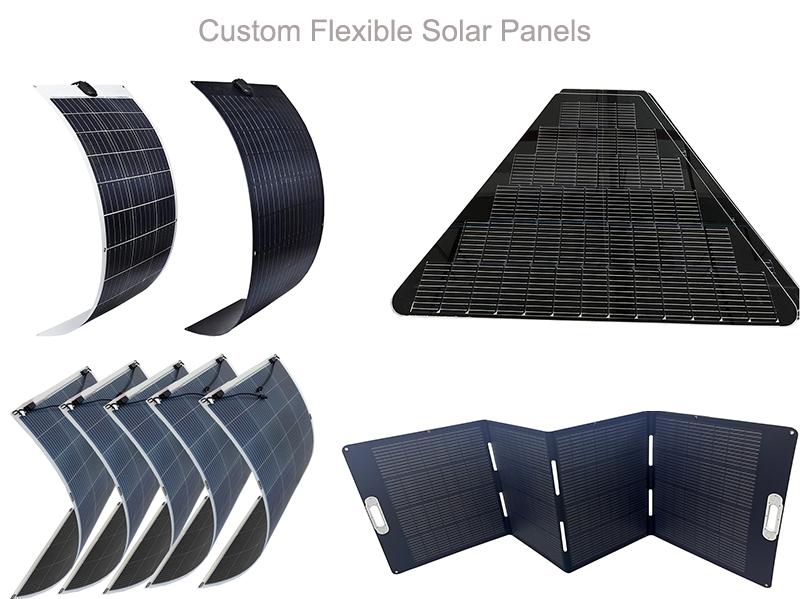
Finding the space to install that extra 20% capacity can sometimes be a challenge, especially on curved roofs, RVs, or irregular surfaces. This is where innovation meets efficiency.
If you are looking for a lightweight, versatile, and high-performance solution to reach your system’s full potential, explore our premium range of Flexible Solar Panels.
Designed to adapt where traditional panels can’t, they are the perfect way to build your energy buffer without compromising on aesthetics or installation space.