

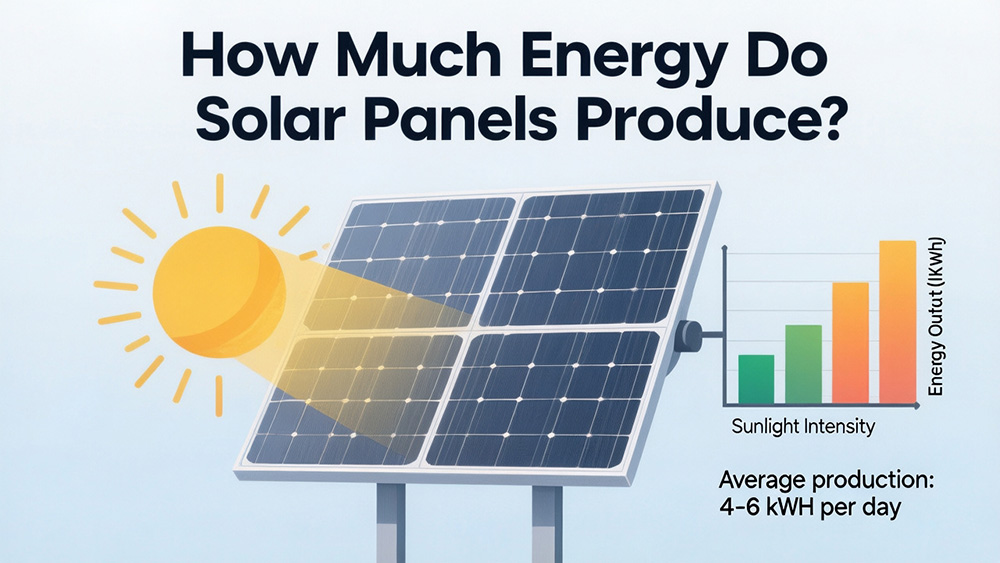
Solar panels convert sunlight into electricity through the photovoltaic effect. Actual energy production is influenced by factors such as rated power output, efficiency, installation location, roof tilt, weather conditions, and panel aging. Most residential solar panels are currently rated between 400 and 460 W, so efficiency can play a stronger role than wattage alone.
A typical household uses around 18 panels, producing about 30–40 kWh of electricity per day, which can generally cover daily electricity needs. Choosing suitable panels helps promote a better balance between upfront cost and long-term returns.
Working principle of solar panels
Solar panels operate through the photovoltaic effect. Their core component is the photovoltaic (PV) cell, which is typically made from semiconductor materials such as silicon. When sunlight strikes the cell surface, photons energize electrons in the semiconductor, causing them to move in a directed way and generate direct current (DC) under the cell’s internal electric field. The DC is then converted into alternating current (AC) by an inverter for use in homes and power systems.
Analysis of key terms in solar energy systems
| Term | Definition |
| Watt (W) | The basic unit measuring electrical power production or consumption at any given moment. |
| Kilowatt (kW) | Equal to 1,000 watts; used to express solar system capacity. |
| Kilowatt-hour (kWh) | The amount of energy produced when 1 kW operates for one hour; your utility bills use this unit. |
| DC Electricity | The initial form of power generated by solar panels. |
| AC Electricity | The type of electricity used by household appliances, converted from DC by inverters. |
What is the output power of a solar panel?
Solar panel power output refers to the amount of electrical power a solar panel can produce per unit time, usually expressed in watts (W) or kilowatts (kW). It is typically rated under standard test conditions (STC) to indicate the module’s instantaneous power capability and its maximum potential output under those conditions.
How much electricity can solar panels generate?
The power generation of solar panels can be estimated using the formula “power × peak sunshine duration × effective efficiency (including system losses)”. Under ideal conditions, the instantaneous power of household solar panels is typically between 250 and 400W.
Taking a 300W panel as an example, with 5 hours of peak sunshine per day and an efficiency of approximately 20%, the daily power generation would be approximately 1.5 kWh.
If 10 panels of the same specifications are installed, the system would generate approximately 15 kWh per day. Further calculations using “daily power generation × 30 / × 365” can be used to estimate monthly and annual power generation, respectively.
What affects the amount of electricity produced by a solar panel?
Sunlight conditions and geographical location
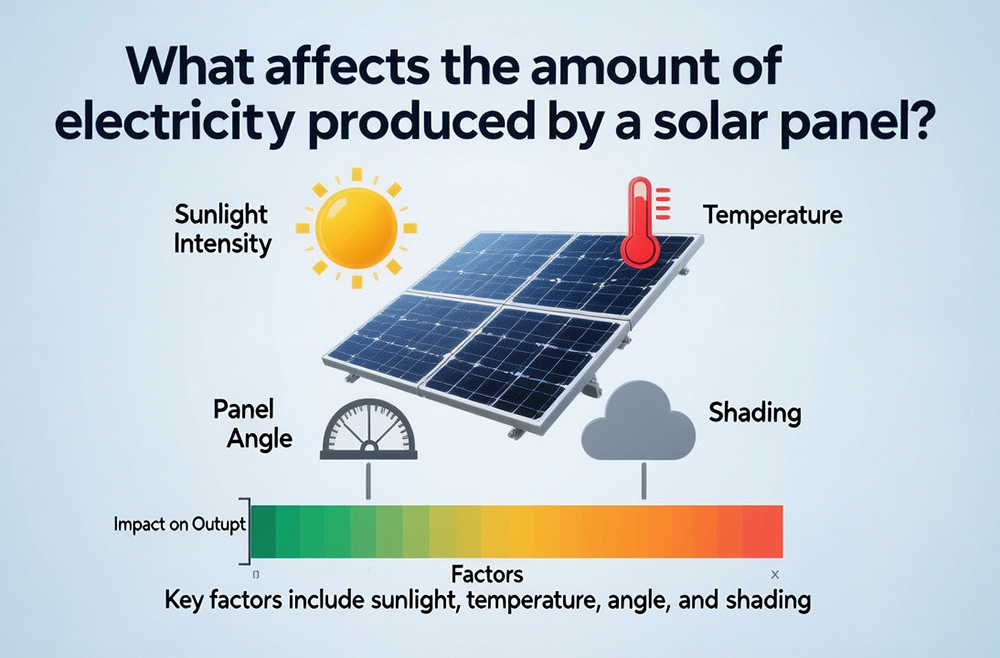
The power generation of solar panels depends primarily on solar radiation. Solar irradiance varies significantly across different geographical locations. Regions near the equator or with long hours of sunshine and many sunny days can generate more power; while high-latitude regions with frequent cloudy, rainy, or smoggy weather have relatively lower average annual power generation.
Solar panel and system characteristics
The type, conversion efficiency, power rating, and system design of solar panels directly affect power generation capacity. High-efficiency, low-temperature-coefficient modules can generate more electricity under the same conditions, while system factors such as inverter efficiency and line losses also affect the final usable electricity.
Roof orientation, angle and obstruction
The orientation and tilt angle of the solar panels determine their effectiveness in receiving sunlight. In the Northern Hemisphere, a south-facing orientation with a tilt angle close to the local latitude is most conducive to year-round power generation; obstructions from buildings, trees, or dust will reduce incident sunlight and significantly decrease the overall system output.
Aging, deterioration and temperature effects
Solar panels experience performance degradation over long-term operation, with their annual power generation capacity gradually decreasing. Meanwhile, high temperatures reduce module efficiency, and poor ventilation exacerbates losses. Therefore, high-temperature resistant design and good heat dissipation are crucial for stable power generation.
How to increase the power generation of solar panels?
Choose the appropriate solar panel type and size
The appropriate type of solar panel should be selected based on the roof area, electricity demand, and climate conditions. High-efficiency modules can generate more electricity in a limited space, and the power and size must be matched to actual needs to avoid wasted capacity or insufficient power supply.
| Panel Type | Best Use Case | Efficiency | Cost Consideration |
| Monocrystalline | Limited roof space; premium performance | 20-24% | Higher initial investment, better long-term returns |
| Polycrystalline | Adequate roof space; budget-conscious | 17-20% | More affordable, slightly lower output |
| NEWLIGHT ENERGY High-wattage | Maximum production per panel | 23-24.5% | Optimal for complete bill offset |
System design and installation optimization
A well-designed system can significantly increase power generation. This includes optimizing component orientation and tilt angle, reducing shading, rationally arranging series and parallel connections, and selecting high-efficiency inverters to reduce system losses and improve overall output.
Operations, monitoring and performance management
Regularly cleaning the solar panels and checking the wiring and inverter’s operating status helps reduce power generation losses caused by dust, aging, and malfunctions. Monitoring systems can promptly detect performance anomalies, ensuring long-term stable power generation.
The impact of advancements in solar energy technology on power generation efficiency
New high-efficiency battery technologies and material improvements are constantly increasing conversion efficiency and reducing degradation rates, enabling solar energy systems to generate more electricity under the same conditions and improving overall return on investment.
Are solar panels worth installing?
While the initial investment in a residential solar system is relatively high, its long-term economic returns and stability are outstanding. A typical 4kW system can generate approximately 3,400 kWh of electricity annually, basically covering the electricity needs of a typical three-bedroom household and significantly reducing annual electricity bills.
Most families can recoup their costs in about 6 years, and the lifespan of solar panels is typically over 25 years, making the subsequent years almost equivalent to “free electricity.”
Government incentives (such as feed-in tariffs or surplus power buyback programs) can further enhance the return on investment. In addition to economic benefits, solar energy reduces dependence on the grid, lowers carbon emissions, and enhances households’ resilience to energy price fluctuations. Considering cost, benefits, and sustainability factors, solar panels are an investment option that offers both economic viability and long-term value.
Conclusion
Solar energy is an important renewable energy source, and understanding the power generation capacity of solar panels can help with scientific planning of the system. Most residential solar panels can generate around 1.5-2 kWh per day, but this varies in many situations.
System performance depends not only on the panels themselves, but also on key equipment such as inverters and energy storage batteries, as well as the overall design. Through optimization and maintenance, power generation can be significantly increased and electricity bills reduced.
XM NEWLIGHT ENERGY offers professional solar panels that can help you determine if they are suitable for installation and how to install them cost-effectively. Visit our product page to find the product that best suits your application.
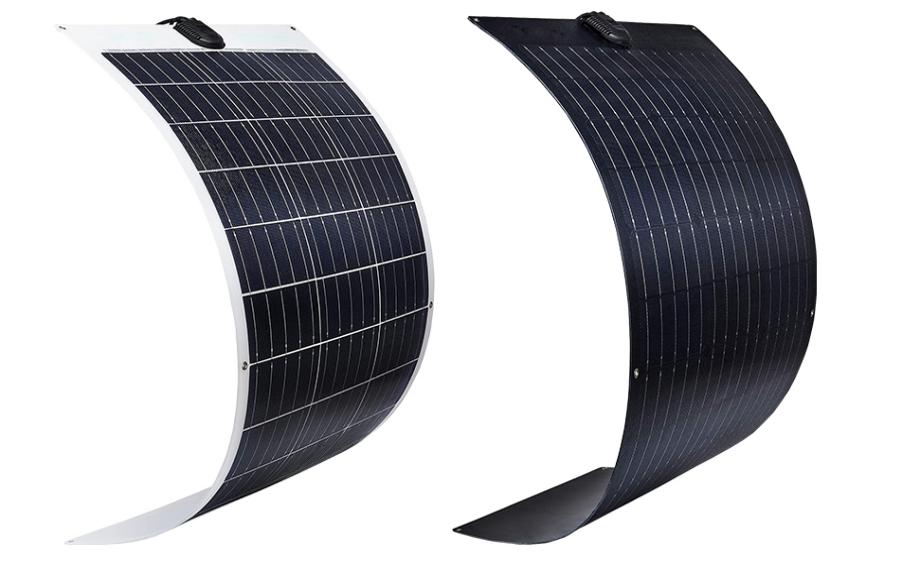
If you want to install Flexible Solar Panels on roofs need solar panel light weight, without bracket,
Easy to installation, contact our team ➪XM NEWLIGHT ENERGY